
Tradition&Heritage


Step inside the stone walls of Franciscan monasteries, where history, science, and nature meet. Along the Makarska Riviera, three Franciscan monasteries have spent centuries quietly collecting things most visitors would never expect to find behind a cloister wall — seashells from the far side of the planet, a 500-year-old grammar book, an entire mountainside of protected wild flora. Monks, it turns out, make excellent collectors.
What do Franciscan monasteries have to do with the Makarska Riviera?
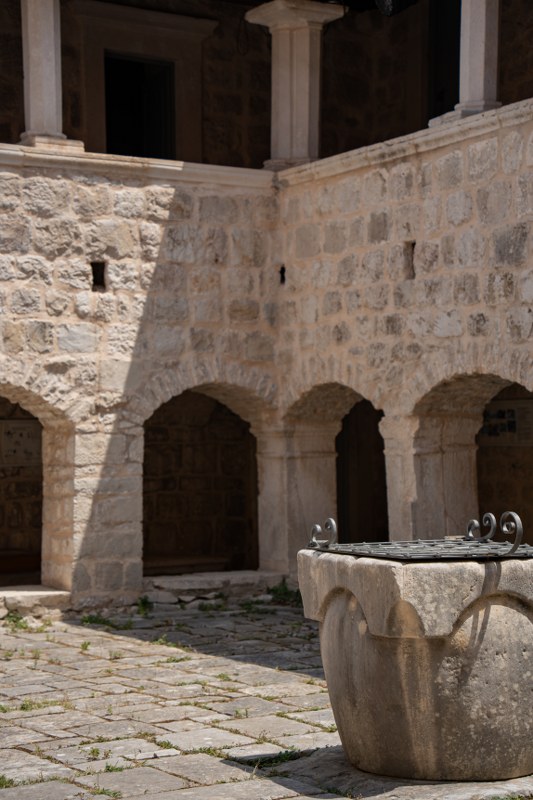
Franciscan friars have lived on this coast since the 15th and 16th centuries, and their monasteries in Makarska, Živogošće and Zaostrog have doubled, over time, as libraries, natural history museums and botanical research stations — alongside their obvious role as places of worship. Beyond being a home for monks and a church for the local community, these buildings have quietly preserved some of the Riviera’s most surprising cultural and scientific treasures.
Makarska: a monastery that hides a museum of the sea
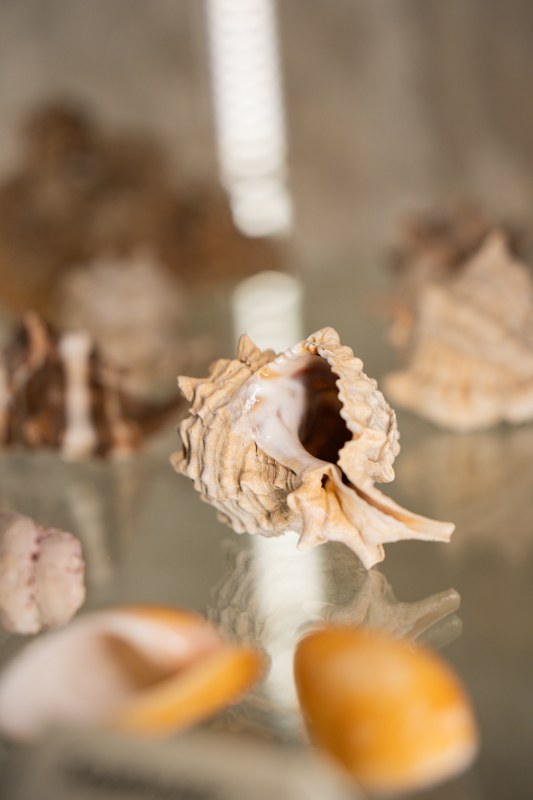
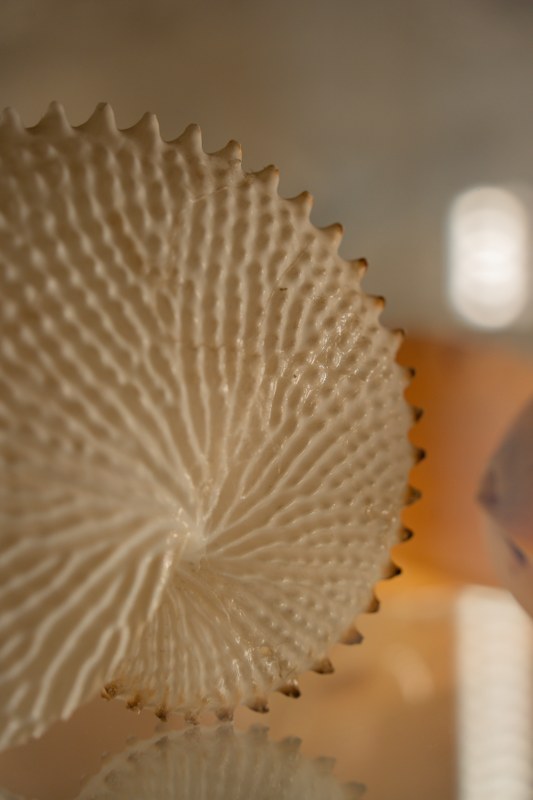
The Franciscan Monastery of St. Mary in Makarska looks, from the outside, like exactly what it is: a 16th-century church and cloister in the middle of the old town. Inside, though, it holds a malacological museum with over 3000 shell specimens, ranging from the Adriatic seabed all the way to the furthest corners of the earth’s oceans.
The museum’s founder, friar Jure Radić, extends his legacy from the museum to the very peaks of Biokovo, where his passion for nature lives on through the preserved alpine flora of the Kotišina herbarium. Radić, a Franciscan scientist who studied both molluscs and mountain botany, founded the Kotišina Botanical Garden above Makarska in the 1980s — not a formal, curated garden, but a fenced-off slice of real Biokovo wilderness, preserving around 300 native plant species between 350 and 500 metres above sea level.
Živogošće: the resilient soul, built to endure
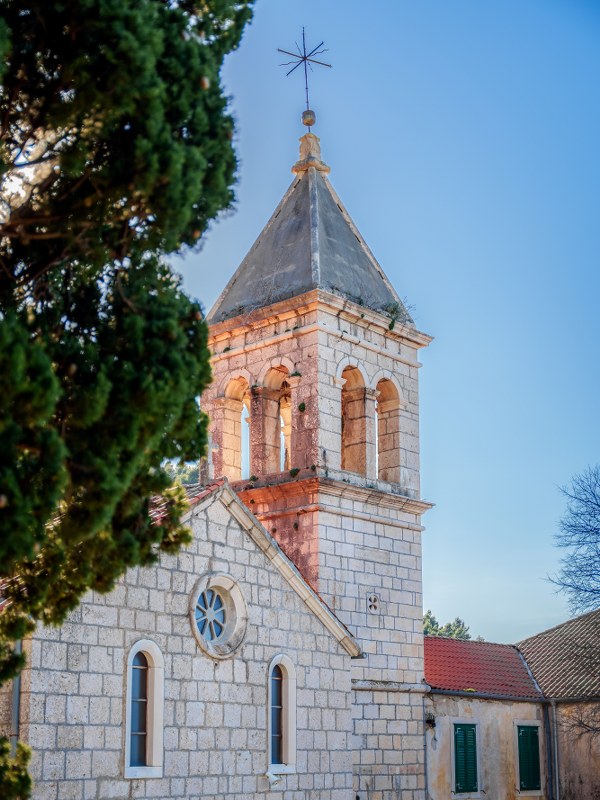
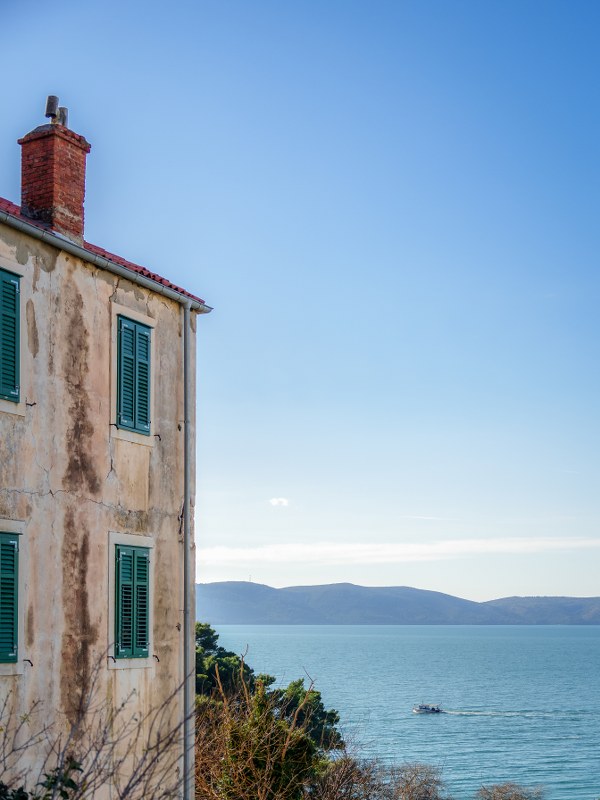
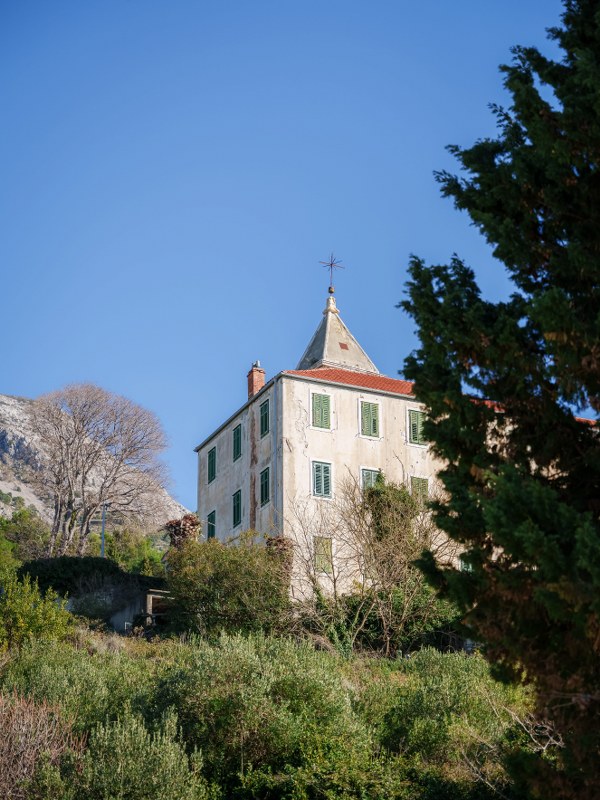
Not every monastery on this coast has had an easy history. The Monastery of the Holy Cross in Živogošće has survived fires, wars and earthquakes, standing today as a testament to the unbreakable spirit of the Riviera. Its story starts with friars fleeing a destroyed monastery near Mostar in 1563, first settling in Drašnice before bura winds and sea spray pushed them further down the coast to Živogošće.
The Church of the Holy Cross was completed in 1620, though it proved too small and was rebuilt at its current size in 1766, with a bell tower added in 1733. In between, Ottoman forces burned the monastery to the ground in 1647, during the Candian War — the friars, sensing the danger coming, had already fled to the island of Hvar and survived to rebuild. Reconstruction was later funded, in part, by a Catholic family from Mostar whose son had fought to liberate the Imotski region. Every stone standing today was rebuilt at least once.

Zaostrog: the seaside sanctuary with a scholar’s secret
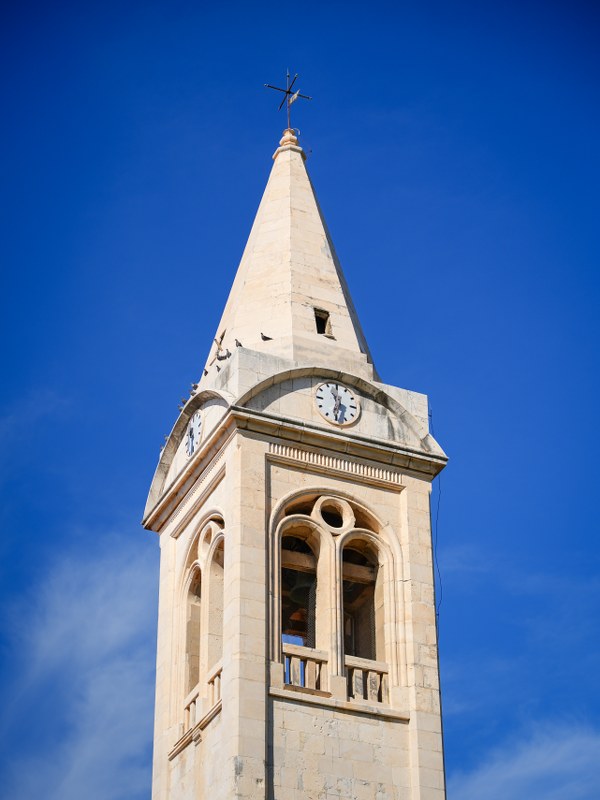
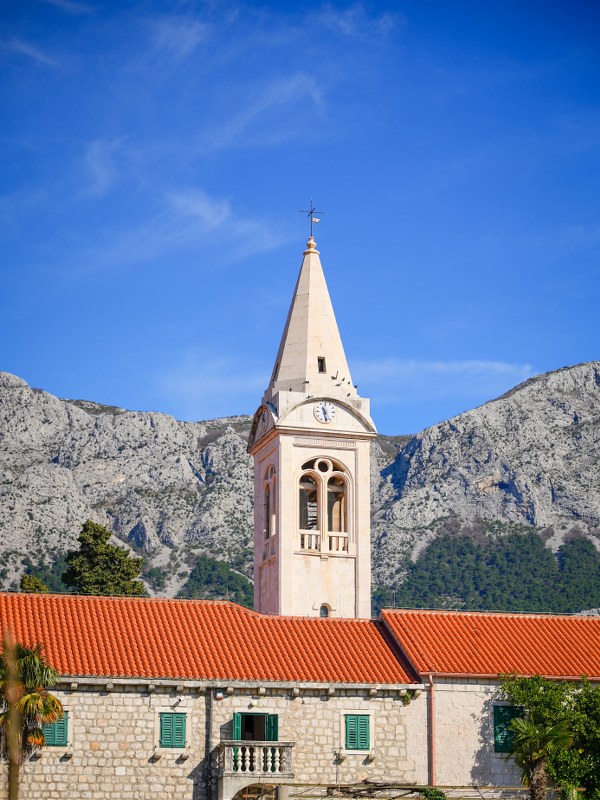
The Franciscan Monastery of St. Mary in Zaostrog looks, at first glance, like a peaceful seaside church. Step past the cloister, though, and it holds a genuinely remarkable library: a 1616 Spanish grammar book, now well over 400 years old, and an Arabic-Italian dictionary printed in Jerusalem in 1582 in elegant Arabic script but Christian terminology, closer to 440 years old than the 500 sometimes quoted, though either way, a genuinely rare survivor. Alongside these sit thousands of other volumes, meticulously brought back to life in the 1970s in a small but beautiful library and archive that protects centuries of documented history and wisdom.
Hidden behind the cloister walls is a botanical garden, a mosaic of exotic scents and rare Mediterranean flora. Here, even a Chinese candy tree finds its home in the Dalmatian stone, an unexpected touch of Asia growing quietly in a Croatian monastery garden.
The church beside the monastery is also the final resting place of friar Andrija Kačić Miošić, the poet of the people whose words still echo through the Riviera. His statue stands today on Makarska’s main square, but his grave is here in Zaostrog, at the entrance to the very church his order called home.
Three monasteries, three very different secrets — a museum of the sea, a survivor of fire and war, and a scholar’s library hidden behind a seaside cloister. Next time the Riviera’s stone bell towers catch your eye from the coastal road, it might be worth stopping to see what the friars have been quietly keeping safe inside.
PHOTO | BORIS LUETIĆ | TZ MAKARSKA (GABRIELA BAŠIĆ FOR MALACOLOGICAL MUSEUM MAKARSKA) | TZ BAŠKA VODA


More Stories to Explore
Tradition&Heritage
9 sculptures spotted on the Riviera: The characters, legends, and humor behind them

Tradition&Heritage
Echoes in stone: Explore 7 archaeological wonders of the Makarska Riviera

Tradition&Heritage
The origin of the Dalmatian dog: a 300-year-old painting hidden in Zaostrog
Tradition&Heritage
The silent archives of the Riviera: Explore the monastic libraries and gardens

Tradition&Heritage
World-class shell collections: The astonishing Malacological Museums of the Makarska Riviera
