
Tradition&Heritage


When most travellers think of the Makarska Riviera, their minds immediately drift to the rhythmic sound of waves on white pebbles and the sun dipping behind the horizon. Yet if you turn your back to the sea for just a moment and look closely at the limestone slopes of Biokovo, you will find a landscape that remembers everything.
From Brela in the north down through Baška Voda, Makarska, Tučepi, Podgora, Drvenik, and Gradac, every stretch of this coast conceals layers of human history reaching back more than three thousand years. Here is your curated guide to seven archaeological sites worth seeking out.
1. Veliki Kaštel in Kotišina — the fortress born from the cliffs
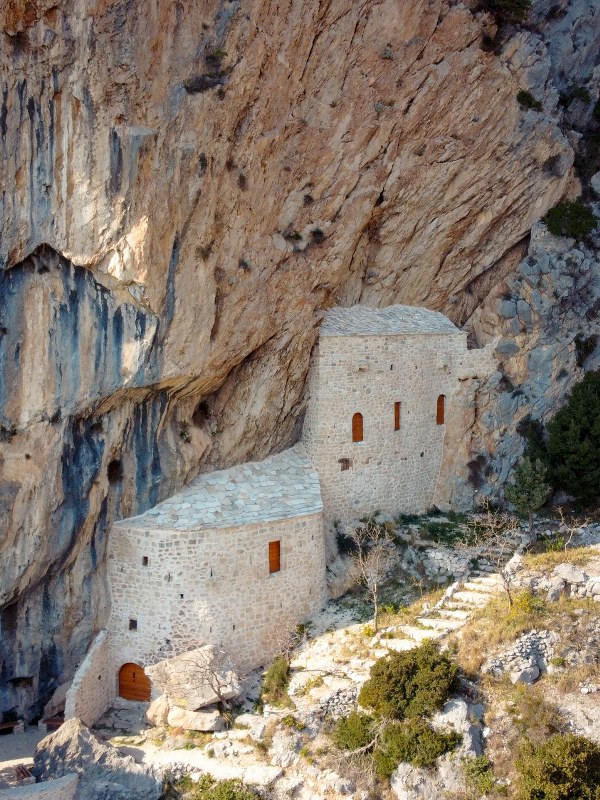
Perhaps the most visually stunning marriage of human ingenuity and natural geology on the Riviera is the Veliki Kaštel in Kotišina, located a short drive above Makarska town centre.
Built during the Candian War in the 17th century, this multi-storey fortress is literally constructed into the natural caves of the Biokovo cliffs, not a building placed beside the mountain, but one that grows out of it. It wasn’t designed for comfortable living; it was a vertical sanctuary built to shelter villagers and monks during periods of intense conflict.
Today: The interior has been renovated into an interactive interpretation centre, while the exterior remains as wild and imposing as ever, surrounded by the wild flora of the Biokovo Botanical Garden.
Best combined with: The botanical path through Kotišina, one of the most rewarding short walks above Makarska. Also easy to reach from Tučepi and Podgora.
2. Saint Peter peninsula in Makarska — the roots of urban history
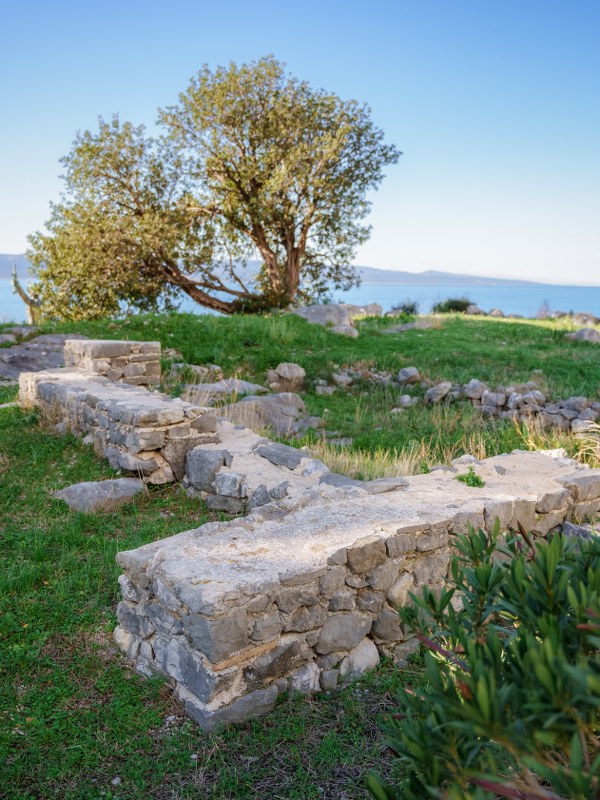
Right in the heart of Makarska, the scenic Saint Peter Peninsula is an open-air history lesson extending into the sea. This coastal headland holds the remnants of a 6th-century Byzantine fortress, built to control the maritime approaches to the bay during late antiquity.
The peninsula was also a key part of the ancient Roman settlement of Muccurum, the official starting point of Makarska‘s urban history, bridging Roman antiquity and early medieval defence in a single slow afternoon walk.
Worth knowing: The peninsula is also the starting point for some of the most beautiful hiking trails on the Riviera. For a full day, combine it with the botanical path above Kotišina or the trails toward Tučepi and Podgora.
Also nearby: The Malacological Museum inside the Franciscan Monastery, one of the world’s most remarkable seashell collections, just a few minutes’ walk away.
3. Archaeological museum collection in Baška Voda — 3000 years of continuity
For travellers who want to hold the tangible fragments of daily life through the ages, the Archaeological Museum Collection in the centre of Baška Voda is an absolute must-visit.
The collection spans nearly 3,000 years, from 2000 BC to the 7th century AD, providing undeniable proof of the long, unbroken continuity of life, trade, and settlement beneath the peaks of Biokovo. It is one of the most concentrated archaeological records of any single stretch of the Dalmatian coast.
Best combined with: One of the five colour-coded hiking routes above Baška Voda, the trail system passes several of the landscape contexts represented in the museum’s collection.
Also nearby: Take a 5–10 minute uphill walk to the Gradina Archaeological Site. Many of the museum’s artifacts were discovered here, and the site features remains from prehistoric, Roman, and early medieval periods, along with panoramic views of Baška Voda and the Adriatic Sea.
4. Troje gomile in Podgora — prehistoric sentinels by the sea
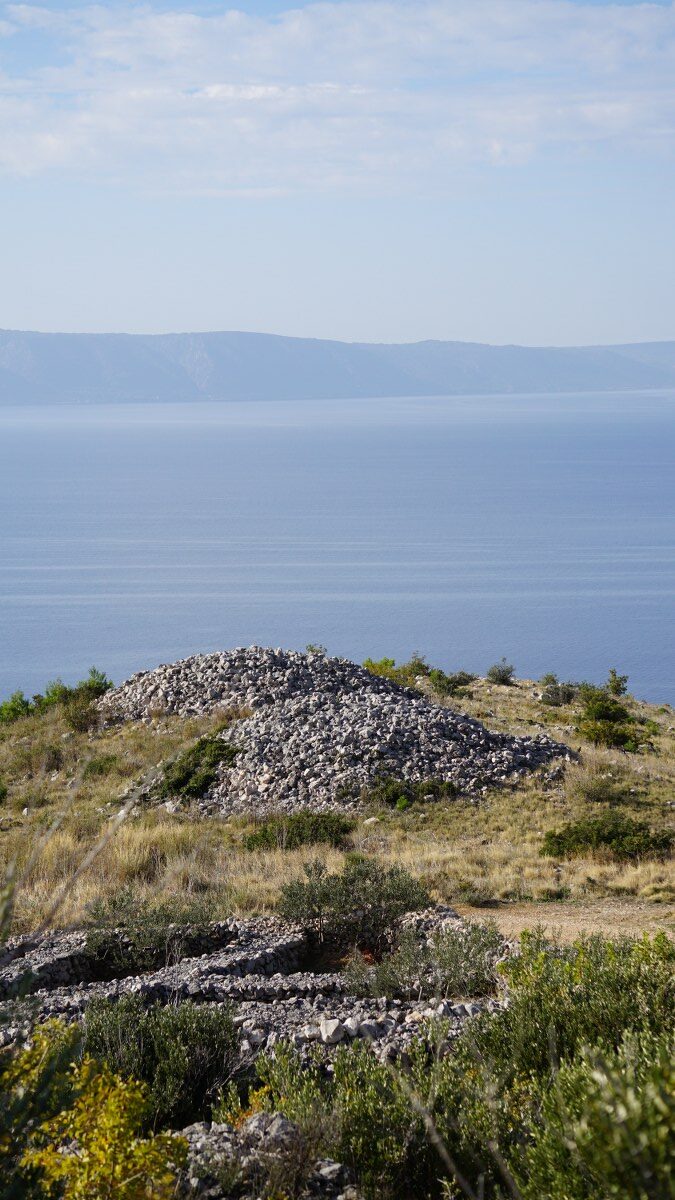
High on the panoramic ridges above Podgora, the site known as Troje gomile provides a rare and genuine connection to the prehistoric past. The locality features prominent Bronze Age or Iron Age burial mounds that served a dual purpose: as sacred graves for prominent figures, and as strategic viewpoints commanding the Adriatic below.
Similar burial mounds have been found above Drvenik and Tučepi, suggesting that constructing these monumental stone grave-hills was a shared practice across the entire length of the Riviera, a prehistoric cultural continuity predating the Roman road by more than a thousand years.
Getting there: Troje gomile is integrated into the hiking trails above Podgora. The 10k Cultural Thrill route passes directly by the site.
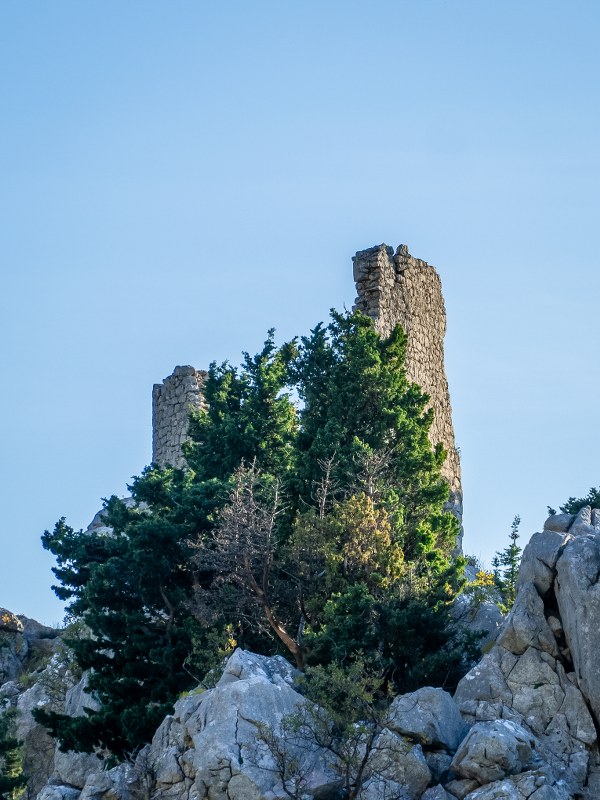
5. Ostrog fortress in Podaca — the medieval mountain pass controller
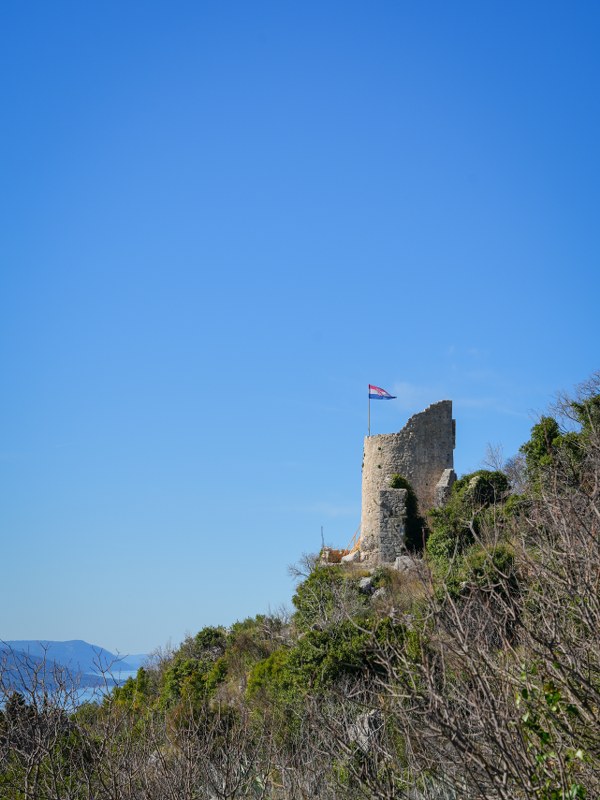
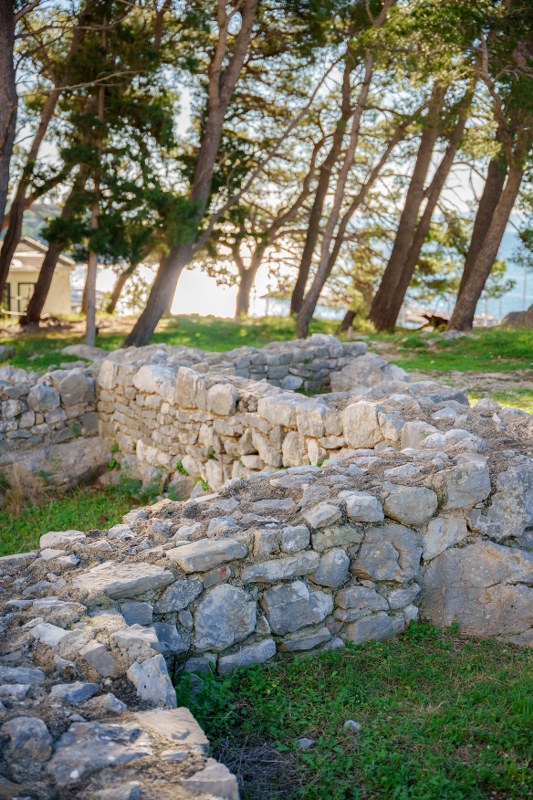
Perched dramatically above the coastal village of Podaca, a small settlement between Brist and Zaostrog, at the southern end of the Riviera, the remains of Ostrog Fortress tell a story of medieval strategy and survival.
This medieval stronghold was positioned in the hinterland to fulfil a dual purpose: sheltering the local population during wartime and controlling the mountain passes leading inland toward Bosnia. The standing stone tower remains a key testament to the strategic importance of the Riviera’s rugged interior, long before the coastal road made the whole coast feel continuous.
Best combined with: A drive south to Gradac and Zaostrog, the southernmost stretch of the Riviera, where the Franciscan monastery holds another layer of the region’s layered history.
6. Prehistoric sites in Tučepi — strongholds and sacred grounds
The slopes above Tučepi are exceptionally rich in ancient remains, offering a multi-layered look into prehistoric territorial defence and spiritual life. At the core is the ancient Gradina hillfort, positioned strategically on the steep slopes of Sutvid.
The surrounding landscapes of the Sutvid and Ravnice areas are dotted with numerous gomile, prehistoric burial mounds similar to those found above Podgora and Drvenik. Taken together, these sites reveal how early communities organised both their spiritual lives and their territorial defences around the same commanding heights that hikers walk today.
Getting there: The sites are most accessible from Tučepi village, on foot via the mountain trails. Also easily combined with a visit to Kotišina above Makarska.
7. The medieval stećci — legends and symbols of Drvenik and Bast
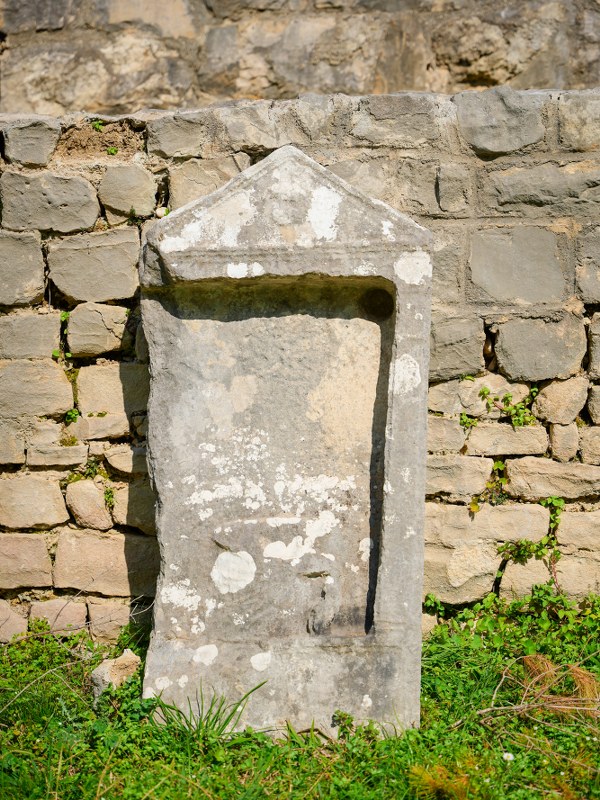
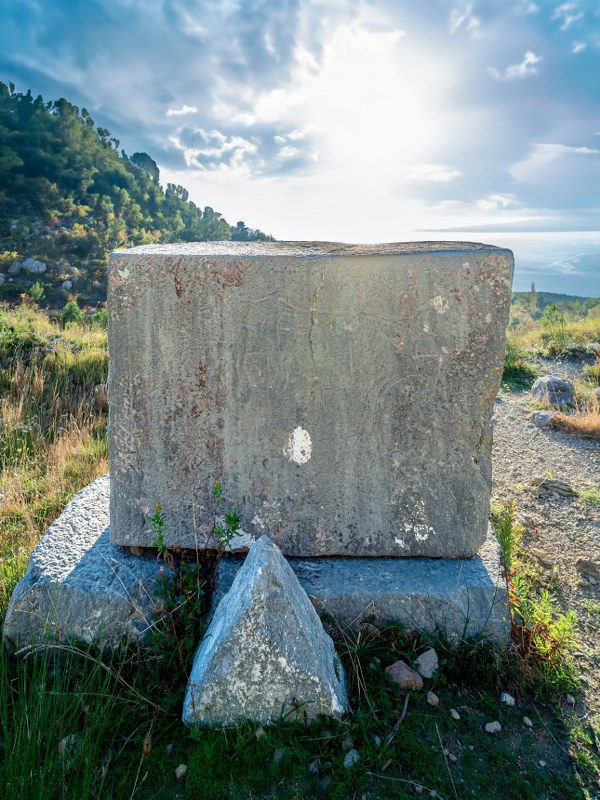
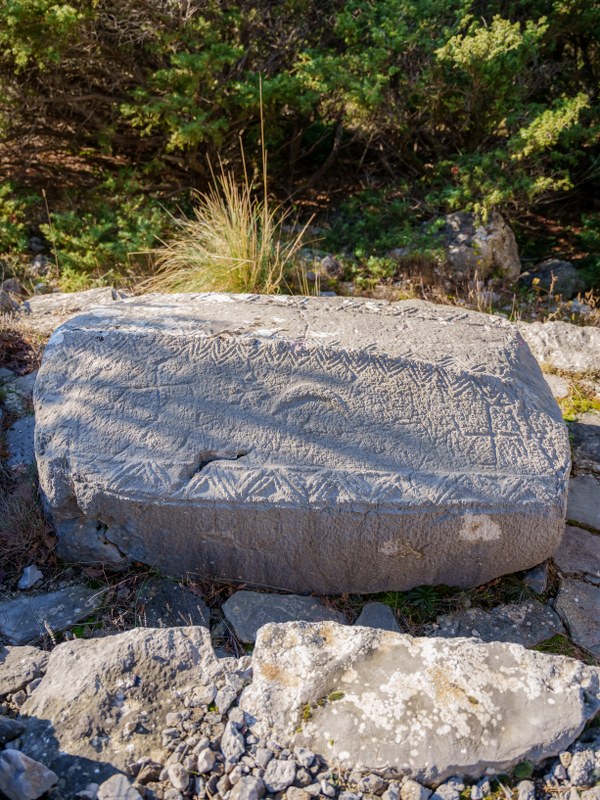
The medieval soul of the Makarska Riviera is preserved in its monumental tombstones, stećci, found at two remarkable localities at the southern end of the coast.
Kostenića greb in Drvenik features a striking relief of two knights and a girl, deeply linked to a local legend of a tragic fight for love. Carved with crescents, swords, and shields, it is one of the most intriguing medieval monuments on the Adriatic coast. Drvenik itself is also the departure point for the ferry to Hvar, making a stop here easy to combine with an island day.
Grebišće in Bast, a small settlement between Baška Voda and Makarska, holds a rare tombstone decorated with ancient crescent and swastika motifs, pre-Christian Illyrian symbols carved onto a medieval Christian monument. It is a genuinely unusual object, easy to walk past and impossible to forget once you understand what you’re looking at.
Please note: Both sites are unprotected open-air monuments. Avoid stepping on the stone reliefs and preserve them for those who come after you.
Tips for the historical explorer
Travel with a map: Many of these open-air sites are integrated into hiking paths. Download trail maps from the tourist offices in Makarska, Baška Voda, Podgora, and Drvenik before setting out.
Combine history with nature: Pair your archaeological tour with a walk through the Botanical Garden next to Kaštel Kotišina, a swim at Brela, or an evening on the seafront at Gradac.
Best season: Spring and autumn, the light is gentler, the heat manageable, and the open-air sites feel exactly as quiet as they should.
PHOTO | BORIS LUETIĆ | ALL IN



More Stories to Explore
Activities
5 easy hiking trails for the whole family
Landscapes&Beaches
Biokovo: Everything you need to know before you go

Guides
The big book of more than 80 answers: Every frequently asked question in one place
Tradition&Heritage
Petrified weddings and mountain fairies: The astonishing legends of Biokovo

Landscapes&Beaches
The mountain that defines the Makarska Riviera
