

Tradition&Heritage


The architecture of the Makarska Riviera tells a dual story, one of resilient mountain shepherds and another of elegant coastal estates. Long before anyone built with a view in mind, every stone here was placed to solve a problem: wind, water, defence, or simply where to press a season’s worth of olives. Walk through what is left of it today, and the problem-solving reads as something closer to beauty.
What is traditional architecture on the Makarska Riviera like?
Two distinct building traditions shaped this coast. Up in the hills, tightly clustered stone hamlets, like the Bekavci-Ivandići complex above Brela, were built by shepherd and farming families around shared courtyards, with cellars, olive mills and cisterns built directly into the community’s daily life. Down on the coast, wealthier families raised walled summer estates, like the Ivičević complex in Drvenik, designed as much for status as for shelter. Both were dictated more by necessity and community than by aesthetics, and both, generations later, turned out beautiful anyway.
Bekavci-Ivandići: a mountain hamlet built to last
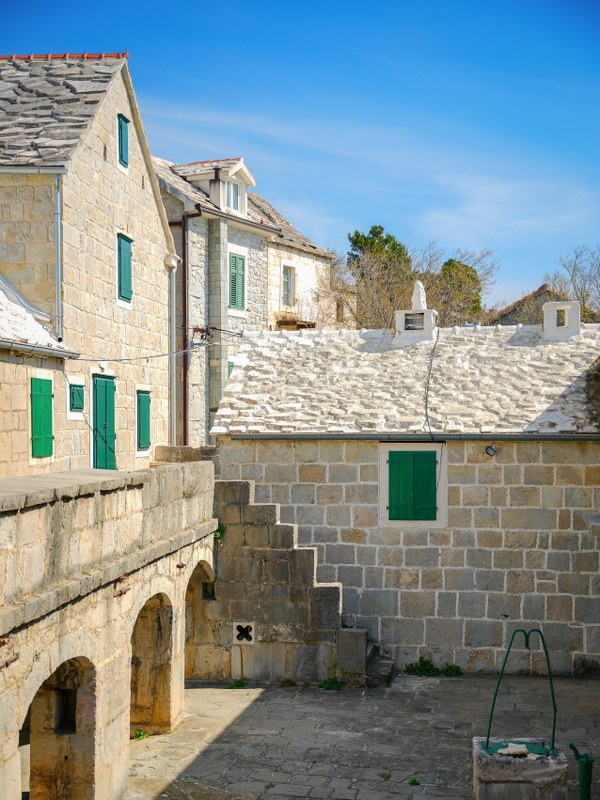
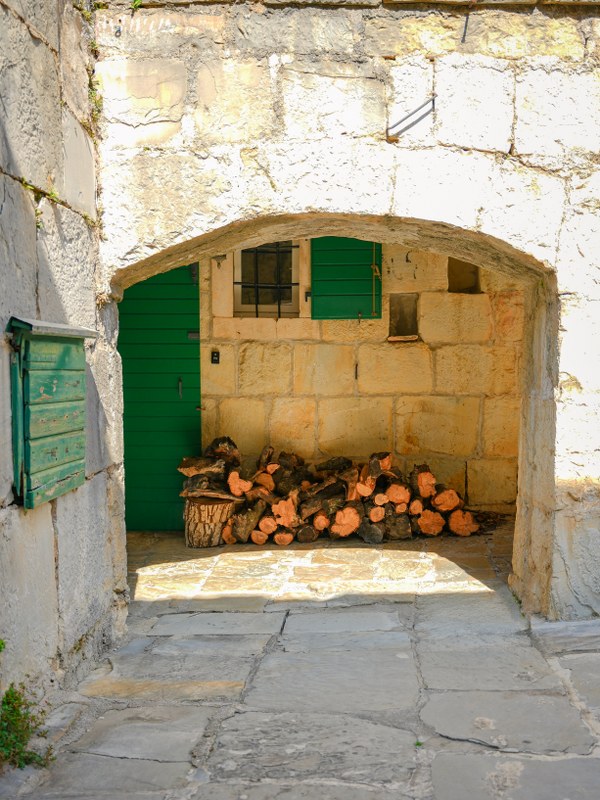
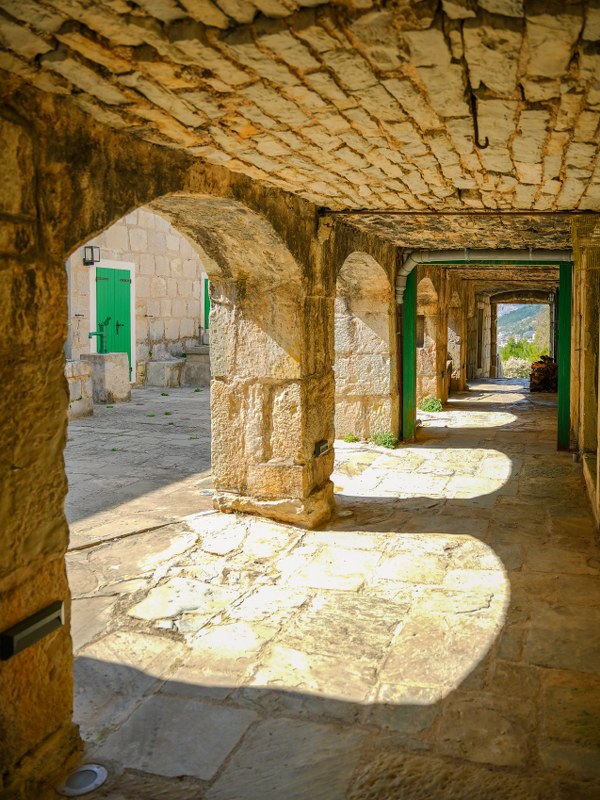
Above Brela, at a site called Kričak, three brothers came down from Podskalica under Biokovo in the 19th century and built what is now a protected cultural monument: the Bekavci-Ivandići complex. It is organised around a closed, easily defended courtyard, with several houses joined by a picturesque portico: flattened arches resting on masonry pillars, carrying a terrace above and covering the entrances to four separate konobas (stone cellars) below.
Nothing about the architecture of the courtyard was decorative. It held an olive mill and a wine press for turning the harvest into a living, and a cistern with two separate well-heads to secure the water supply. Every house in the complex is roofed with heavy stone slabs, built to withstand Biokovo’s wind. In 1938, 58 people lived across these houses, and the complex was substantial enough to include Brela’s first school, which operated on-site until 1950. Today it stands quietly, its practical genius outliving the daily grind it was built for.
The Ivičević estate: when the coast built for status
A short drive south in Drvenik tells a different version of the same story. The Ivičević family’s combined residential and working estate at Donja vala was enclosed by a high wall lined with puškarnice, defensive musket loopholes, an architecture feature it shared with similar noble estates up and down the coast, including the Kačić complex in Tučepi, the Ivanišević estates in Tučepi and Gradac, and the Mrkušić summer house in Podgora. A 1805 plan of Makarska even shows this defensive walling as a deliberate, recognised feature of the open-type coastal estates built by prominent families across the Riviera, proof that looking elegant and staying defensible were never seen as contradictory goals on this coast.
Every element of the traditional architecture served a purpose
Wide-arched porches sheltered the entrances to konobas below. Heavy stone-plate roofs kept the bura wind from tearing the structure apart. Cisterns secured drinking water through dry summers, while wine presses and olive mills turned manual labour directly into a means of survival. These were not just houses: they were complete, self-sufficient ecosystems built from the same stone the builders had to clear from the ground before they could plant anything on it.
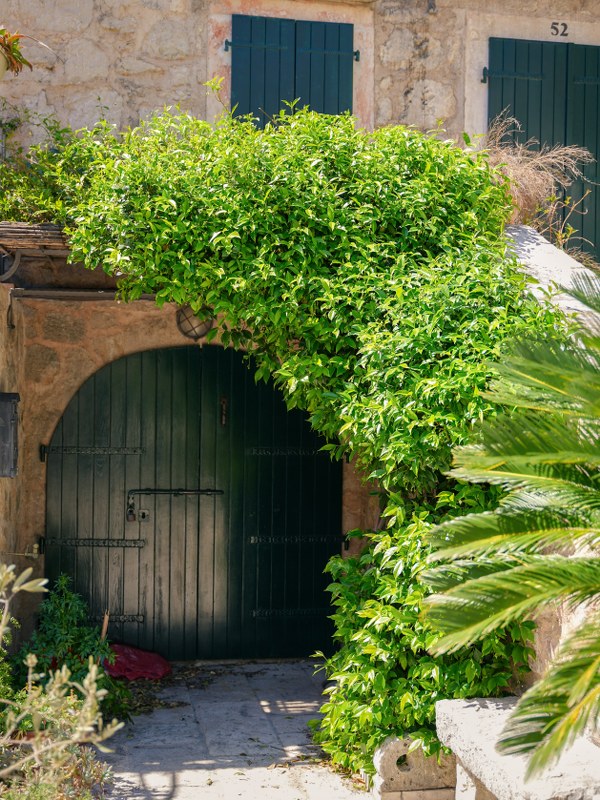
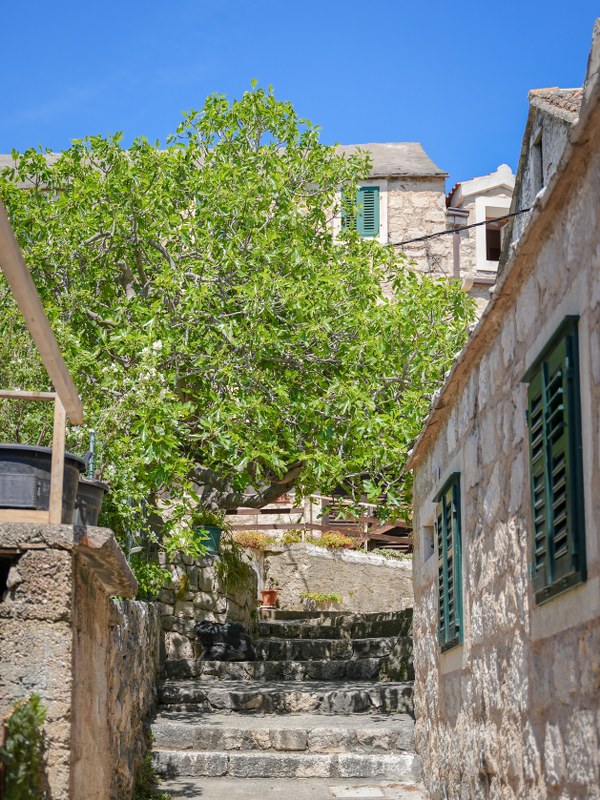
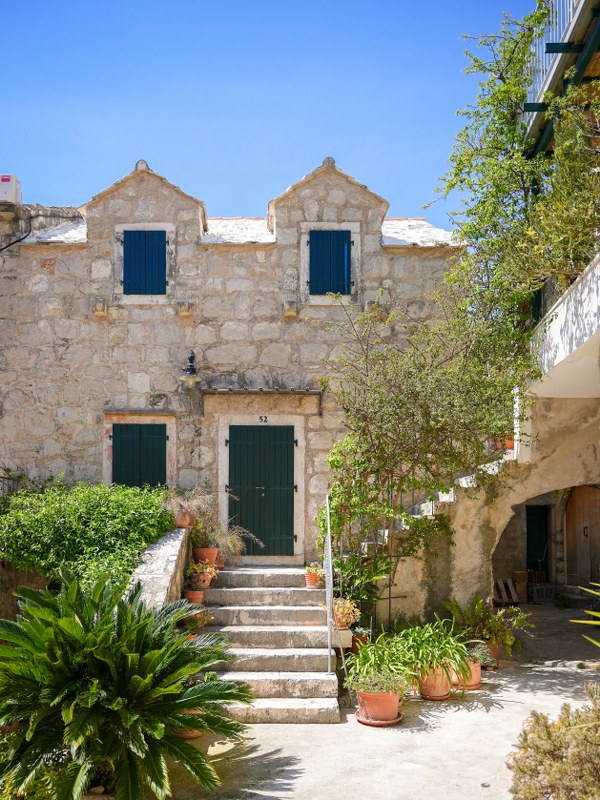
Bratuš: where a fishing village became a village of stone
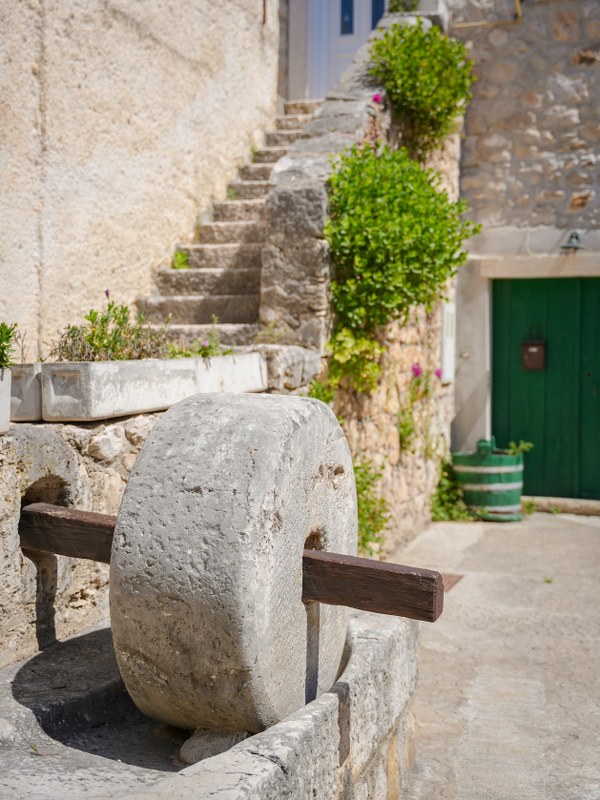
Not every settlement on the Riviera was hamlet or estate, some were simply fishing villages, and Bratuš, in the municipality of Baška Voda, is one of the best preserved examples of traditional architecture. The place name was first recorded in 1674, though the village as it stands today took shape in the 18th century, when several families resettled here from Podgora. At its centre sits a small square known as Kačićevi dvori, ringed by old stone houses, with a pebble cove and small harbour just in front and a prehistoric hillfort site, Gradina, on the slope above. Around 50 people live there today, and the centre is still dominated by the same stone houses that gave the village its quiet, unhurried character in the first place, a genuinely authentic, Dalmatian, traditional retreat tucked beneath Biokovo.
Frequently asked questions about traditional architecture on the Makarska Riviera
What is the Bekavci-Ivandići complex? A protected 19th-century stone hamlet above Brela, at Kričak, built by three brothers around a shared courtyard with cellars, an olive mill, a wine press and a cistern, roofed throughout in heavy stone slabs.
What is the Ivičević estate in Drvenik? A walled 18th-century residential and working estate (ladanjsko-gospodarski sklop) belonging to the Ivičević family at Donja vala in Drvenik, enclosed by a defensive wall lined with musket loopholes, similar to noble estates elsewhere on the Riviera.
Why do old Riviera houses have stone-slab roofs? Heavy stone-plate roofs were built to withstand the force of the bura, the strong, gusting wind that regularly hits this coast, offering more resistance than lighter roofing materials.
What is Bratuš known for? Bratuš is a small, well-preserved former fishing village in the municipality of Baška Voda, first recorded in 1674 and resettled by families from Podgora in the 18th century, known today for its quiet atmosphere and old stone houses.
Were coastal estates and mountain hamlets built the same way? No, mountain hamlets like Bekavci-Ivandići were built around shared, practical courtyards for farming families, while coastal estates like the Ivičević complex were walled and defensively fortified residences built by wealthier families, though both relied on the same local stone and building techniques.
Found today throughout the Riviera, these stone remnants stand as a record of the architectural genius of ancestors who built entire ecosystems rather than just beautiful homes. The authentic, Dalmatian, traditional architecture and relaxed, peaceful vibes are still there for anyone willing to look past the beach for an afternoon — in a hamlet above Brela, an old estate in Drvenik, or a quiet square in Bratuš.
PHOTO | BORIS LUETIĆ


More Stories to Explore
Tradition&Heritage
Echoes in stone: Explore 7 archaeological wonders of the Makarska Riviera

Tradition&Heritage
Feeling lost? Let the towers of the Makarska Riviera guide you back on the right path

Tradition&Heritage
Franciscan monasteries and the secrets they keep

Tradition&Heritage
The silent archives of the Riviera: Explore the monastic libraries and gardens
