
Tradition&Heritage


Beyond the summer crowds and the shimmer of the Adriatic lies a different kind of wealth, preserved in the cool shadows of the Biokovo cliffs. For centuries, the monasteries of the Makarska Riviera have served as the region’s intellectual and spiritual anchors, safeguarding secrets the sea could never reach.
This isn’t simply a tour of religious sites. It’s a wander through the Riviera’s ‘silent archives’: places where history lingers in faded parchment, weathered stone, and the shifting shade of old cypress trees. From the southern village of Zaostrog to the spring-fed walls of Živogošće, each stop along the coast holds a story the guidebooks rarely tell.
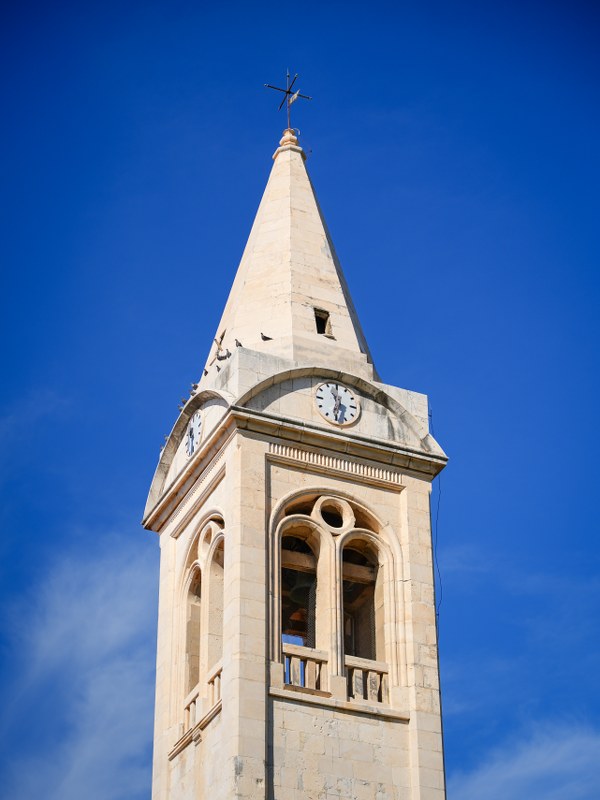
1. The library of the Mediterranean — Franciscan monastery, Zaostrog
In the quiet village of Zaostrog, the air smells of sea salt and dried citrus. Tucked between Gradac and Brist at the southernmost end of the Riviera, this monastery holds one of the most significant libraries on the Dalmatian coast, a sanctuary for polyglots and historians alike.
The highlight: A 400-year-old Spanish grammar and a nearly 450-year-old Arabic-Italian dictionary, evidence that this coastline has always been a crossroads of cultures and continents.
Why visit: To experience the stillness of a room where the world’s languages have been preserved for half a millennium, and to wander the monastery garden, one of the most peaceful corners of the entire Riviera.
Best combined with: A short drive north to Gradac or a stop at the pebble beaches of Brist on the way back.
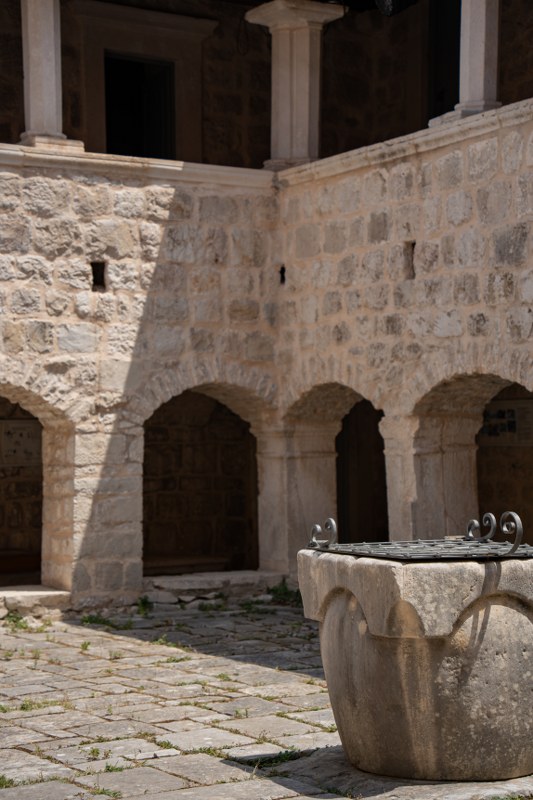
2. The cathedral of the deep sea — Malacological museum, Makarska
In the heart of Makarska, a monk with an eye for patterns once gazed at the sea and saw geometry everywhere. Today, the Franciscan monastery houses one of the world’s most remarkable seashell collections, over 3,000 specimens gathered from every ocean.
The highlight: This is where science and the sacred overlap. Every shell, carefully labeled, tells a story of the Adriatic’s deep places, a patient record of tides and time.
Why visit: To see the intricate mathematics of nature housed within the solemn architecture of the friars. It’s a five-minute walk from the main promenade, and most visitors walk straight past it.
Best combined with: The monastery garden café, and an afternoon swim at Donja Luka beach. From Makarska you’re also just minutes from Tučepi and Podgora.
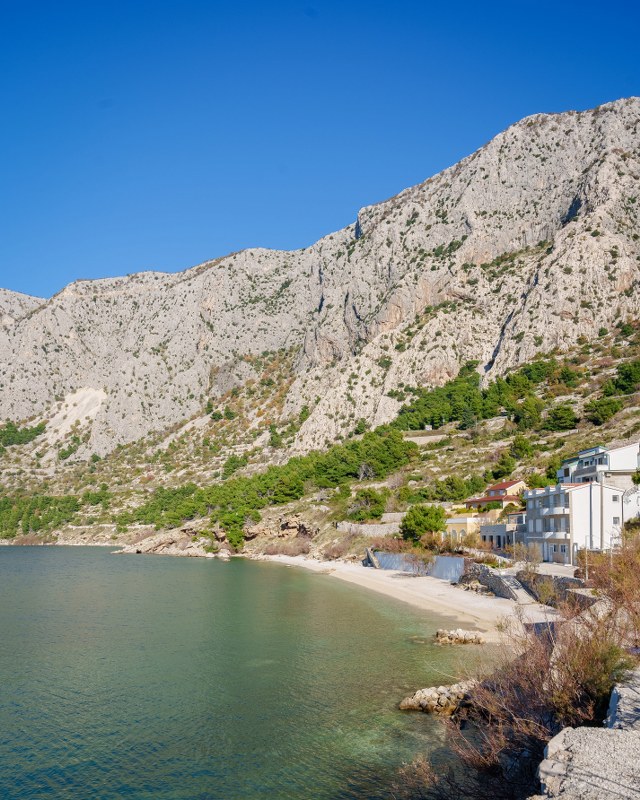
3. The altar in the karst — hermitages and caves of Biokovo
When danger loomed from the sea, the ‘archives’ moved up the mountain. During centuries of Ottoman raids and coastal unrest, monks and villagers from Makarska, Brela, and the surrounding settlements carried their most precious things into Biokovo’s limestone caves.
The legacy: This forged an unbreakable bond between the mountain, the monks, and the people. These stone hermitages, tucked into the grey karst, became silent keepers of the region’s faith and memory.
Why visit: For the raw, rugged atmosphere and the profound silence that only the mountain can offer, a complete contrast to the busy shoreline below.
Getting there: The caves are most easily reached from Makarska via the Biokovo road, or on foot along mountain trails starting from Tučepi and Podgora.
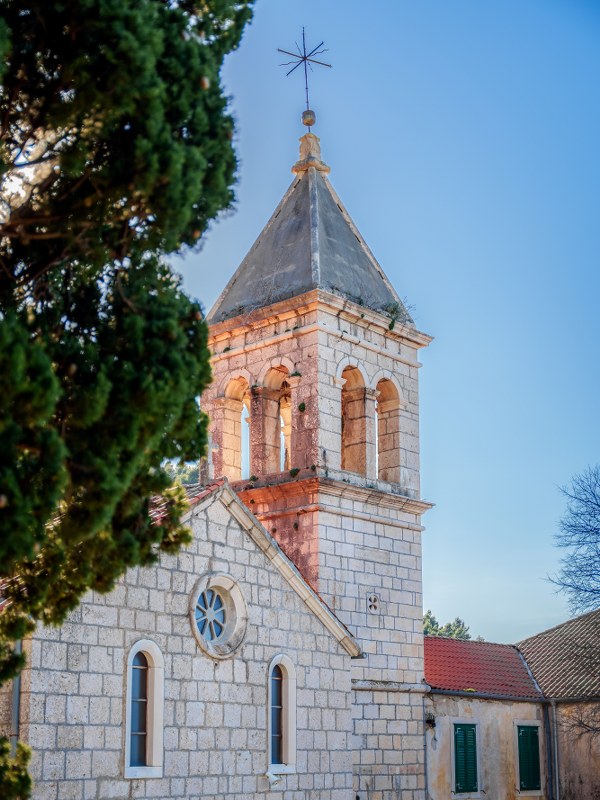
4. The sanctuary of the springs — Monastery of the Holy Cross, Živogošće
The monastery in Živogošće might be the Riviera’s most poetic stop. Positioned between Igrane to the north and Drvenik to the south, time feels layered here. The building stands surrounded by old, towering cypresses that filter Mediterranean sunlight into slow-moving shadows.
The highlight: Under the monastery’s walls, a Roman poem carved into rock nearly 1,600 years ago still praises the spring that runs from the mountain above. It may be the oldest ‘review’ ever written about this stretch of coastline.
Why visit: To stand at the intersection of Roman antiquity and Franciscan tradition, surrounded by the scent of ancient pine and fresh mountain water.
Best combined with: A swim at the small bay below, then a drive north through Igrane, a village whose tall bell tower is one of the most recognisable silhouettes on the Riviera.
Plan your visit
For the best experience, visit these silent archives in late March or October. The weather is mild, the light is gentle, and the monasteries feel especially peaceful without the summer crowds. Most sites are open to visitors during morning hours; it’s worth calling ahead, particularly for the smaller monastery in Živogošće.
The full route to explore these archives, from Brela in the north down to Zaostrog in the south, can be driven comfortably in a single day, with stops in Makarska, Tučepi, Živogošće, Igrane, and Drvenik along the way.
PHOTO | BORIS LUETIĆ | TZ MAKARSKA (GABRIELA BAŠIĆ FOR MALACOLOGICAL MUSEUM MAKARSKA)


More Stories to Explore
Tradition&Heritage
World-class shell collections: The astonishing Malacological Museums of the Makarska Riviera

Tradition&Heritage
Franciscan monasteries and the secrets they keep

Tradition&Heritage
9 sculptures spotted on the Riviera: The characters, legends, and humor behind them

Tradition&Heritage
Echoes in stone: Explore 7 archaeological wonders of the Makarska Riviera
