Tradition&Heritage


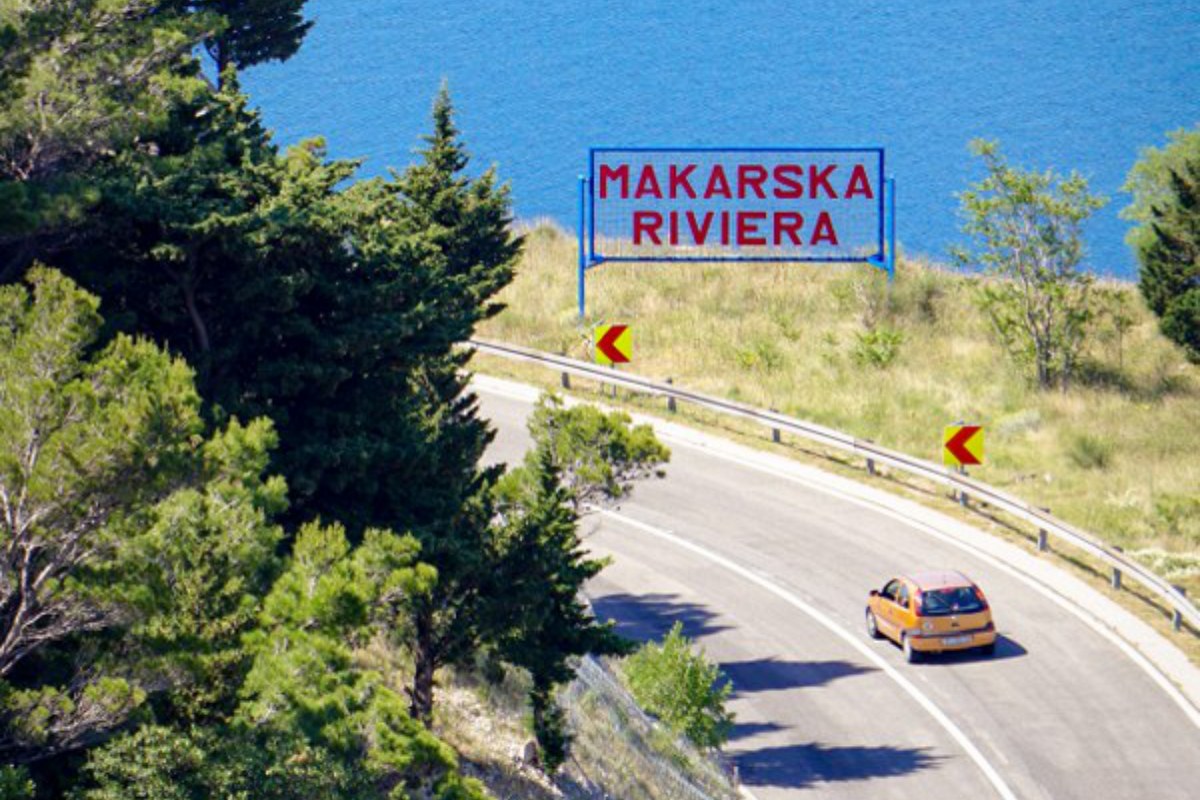
If you slow down enough while strolling along the Makarska Riviera, you will discover that it is, in fact, an open-air gallery. Scattered across the towns from Brela in the north to Gradac and Zaostrog in the south, a remarkable collection of bronze and stone sculptures keeps quiet watch over harbours, promenades, and rocky coastlines.
Some sculptures honor the fishermen and bishops who shaped daily life on this coast. Some celebrate ancient mythology and maritime faith. And at least one is simply very funny. Here is your guide to nine sculptures that deserve to be sought out.
1. Mediterranean Monk Seals — Drvenik
Location: Near the Drvenik ferry port (connection to Hvar)
Theme: Wildlife and conservation
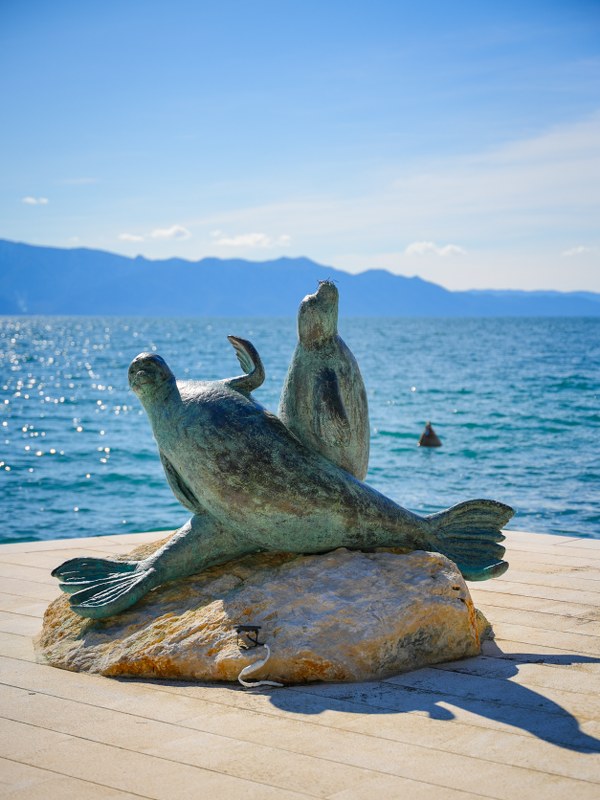
Right by the waterfront in Drvenik, where the ferry departs for the island of Hvar, two bronze Mediterranean monk seals rest by the sea. Locally known as sredozemna medvjedica (sometimes affectionately called the “sea bear”), these creatures were once a common presence in the hidden caves along this coastline.
Fishermen did not always welcome them, the seals had a habit of raiding nets, but this sculpture celebrates something different: the hope for their permanent return to the clean, protected waters of the Riviera. It is a quiet monument to a fragile coexistence between people and the sea.
- Best combined with: The medieval stećci (tombstones) at Kostanića greb just above Drvenik, or a drive south toward Gradac and Brist.
2. Our Own Manneken Pis – Gradac
Location: Gradac waterfront promenade
Theme: Dalmatian humor, European history
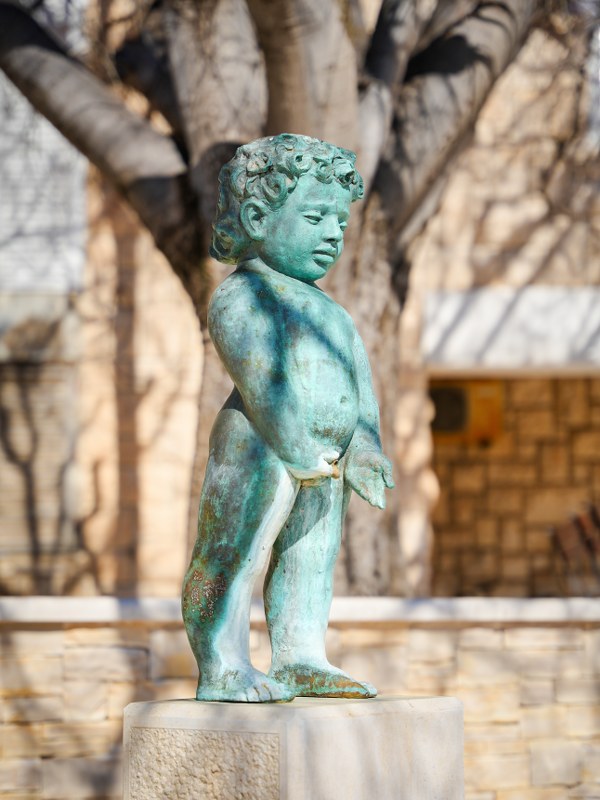
At the southern end of the Riviera, Gradac has installed its own take on the famous Brussels landmark. Perched on a stone pedestal that officially marks Croatia’s entry into the European Union in 2013, a small boy does what boys have always done, with cheerful disregard for geopolitical significance.
It is one of the finest examples of classic Dalmatian humor: taking something enormous and serious and deflating it with a single, irresistible gesture. Gradac is also one of the quietest and most beautiful towns on the Riviera, worth a stop not just for the sculpture but for its long pebble beach and the gentler pace of its seafront.
- Best combined with: The Franciscan monastery in nearby Zaostrog, just a few minutes’ drive north along the coast.
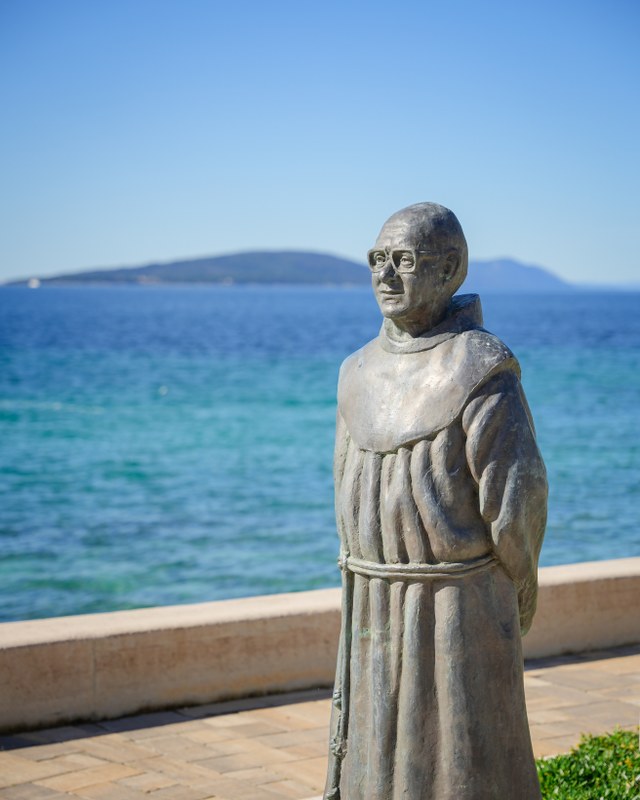
3. Fra Aleksandar Ribičić – Zaostrog
Location: Zaostrog waterfront promenade
Theme: Knowledge, botany, Franciscan heritage
On the seafront of Zaostrog, a bronze friar takes his customary evening walk. Fra Aleksandar Ribičić was, by any measure, an extraordinary figure: a priest, a philosopher, a librarian, and a respected botanist who methodically documented the Mediterranean flora of the Riviera in an era when most of Europe had barely begun to notice the plants growing at its feet.
The monument stands on the exact stretch of waterfront where he used to walk outside the walls of the Franciscan Monastery of St. Mary, one of the most significant monastic libraries on the Dalmatian coast. If the sculpture prompts you to step inside the monastery itself, do: the library’s collection of rare manuscripts, including an almost 450-year-old Arabic-Italian dictionary, is genuinely extraordinary.
- Best combined with: A walk north from Zaostrog along the coastal path toward Brist, or a drive through to Gradac.
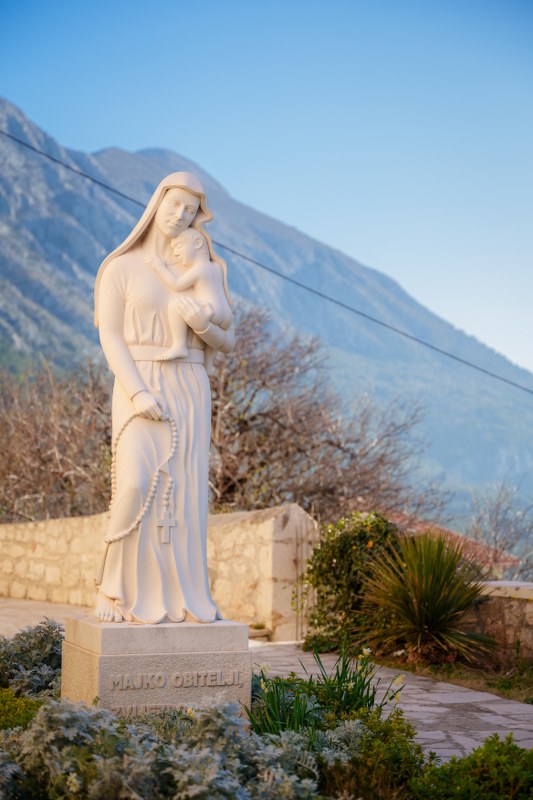
4. Mother of the Family and Star of the Sea — Igrane
Location: In front of the Parish Church of Our Lady of the Rosary, Igrane
Theme: Maritime faith, family, Stella Maris tradition
On an elevated spot in Igrane, a village whose tall bell tower is one of the most recognisable silhouettes on the entire Riviera, this statue combines two deeply held traditions of the Dalmatian coast: the warmth of a mother’s protective embrace, and the ancient concept of Stella Maris, the Star of the Sea.
For generations, the concept of Stella Maris was literal here: a fixed celestial point by which fishermen navigated the dark Adriatic. This sculpture fuses the sacred and the domestic into a single form, looking out toward the island of Hvar just visible across the water.
- Best combined with: The coastal path from Igrane south toward Živogošće, which passes through ancient olive groves and ends near the Franciscan Monastery and the famous Roman-era Nymph sculpture.
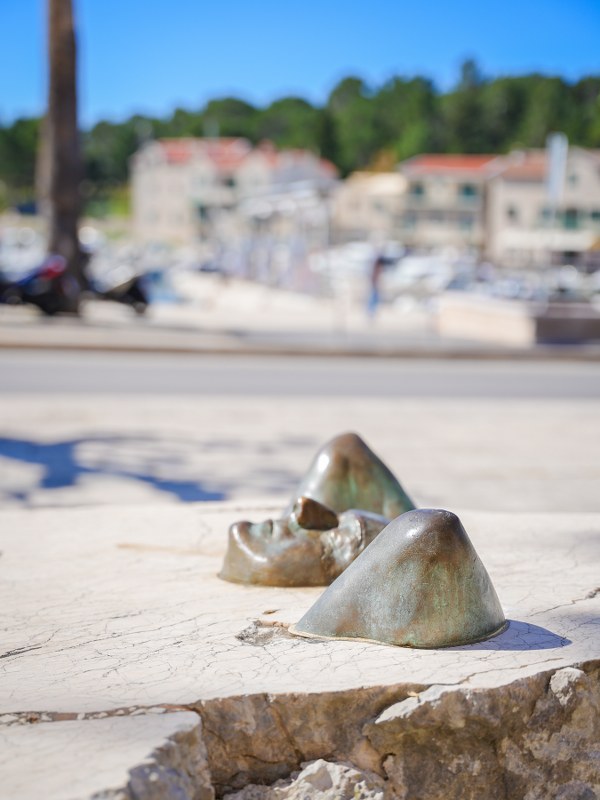
5. The Bonaca Swimmer — Makarska
Location: Makarska town harbour promenade
Theme: Tourism heritage, Mediterranean lifestyle
At the edge of Makarska‘s harbour, a bronze swimmer floats horizontally above the concrete, eyes closed, completely at rest, going nowhere in particular. Created to mark 100 years of organised tourism in Makarska, the Bonaca swimmer is one of the most photographed sculptures on the Riviera and the perfect visual metaphor for what this coast has always offered: the art of doing nothing beautifully.
- Best combined with: A walk along the full Makarska promenade, followed by a visit to the Franciscan Monastery or the botanical path up to Kotišina. Tučepi is just minutes away for those who want to continue along the coast.
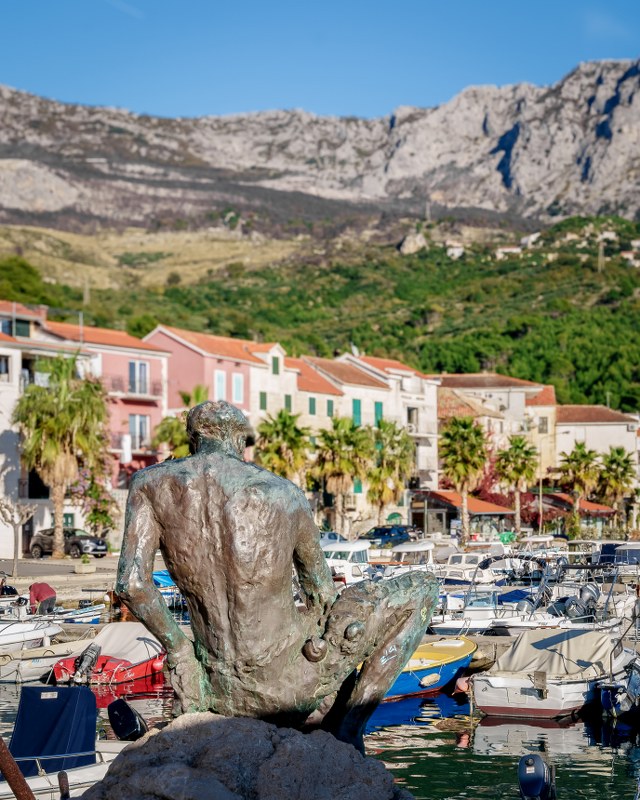
6. The Fisherman — Podgora
Location: Podgora main harbour
Theme: Maritime heritage, seafaring identity
At the quiet end of the Podgora harbour, a fisherman stands watch through the night. Podgora was built on fishing and seafaring long before the first tourist arrived, and this detailed bronze figure honours the founding spirit of the town: the men who launched wooden boats into the dark water before dawn and brought the sea’s harvest back to shore.
- Best combined with: The Uzorita statue on the rocks nearby, and an evening walk along the Podgora seafront, one of the most atmospheric promenades on the Riviera.
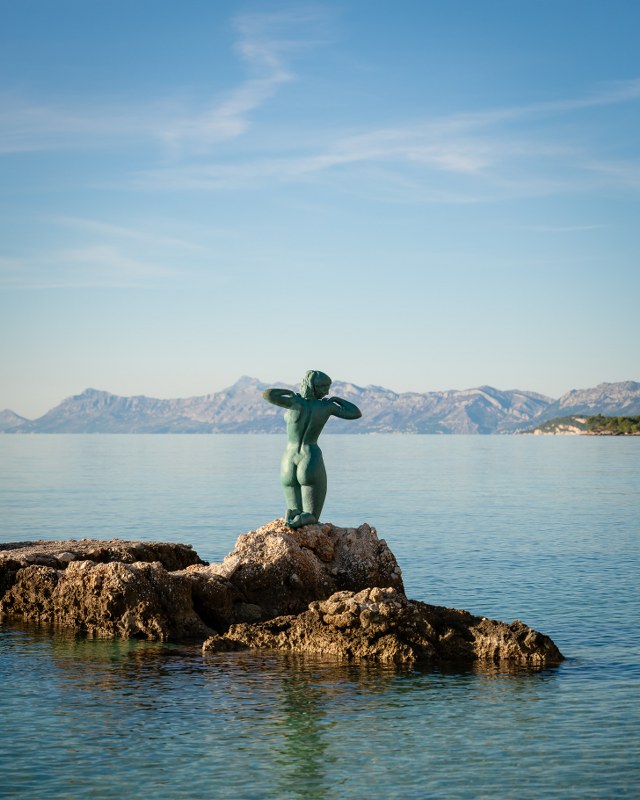
7. Uzorita — Podgora
Location: Rocky coastline above the sea, Podgora
Theme: Love, longing, maritime life
On a rocky ledge above the Adriatic in Podgora, Uzorita stands with her gaze fixed on the open horizon. She is the sailor’s wife, not a specific historical figure but an archetype, a composite of every woman who stood on these rocks watching the sea for a boat that might return today or might never return at all.
The sculpture captures something specific to this stretch of coast: the Adriatic was not just a beautiful backdrop; it was a working sea, unpredictable and indifferent. Uzorita remembers that.
- Best combined with: The Fisherman statue in the harbour below, and the Seagull’s Wings Monument on the hill above; together, they form an unofficial trilogy of Podgora‘s maritime identity.
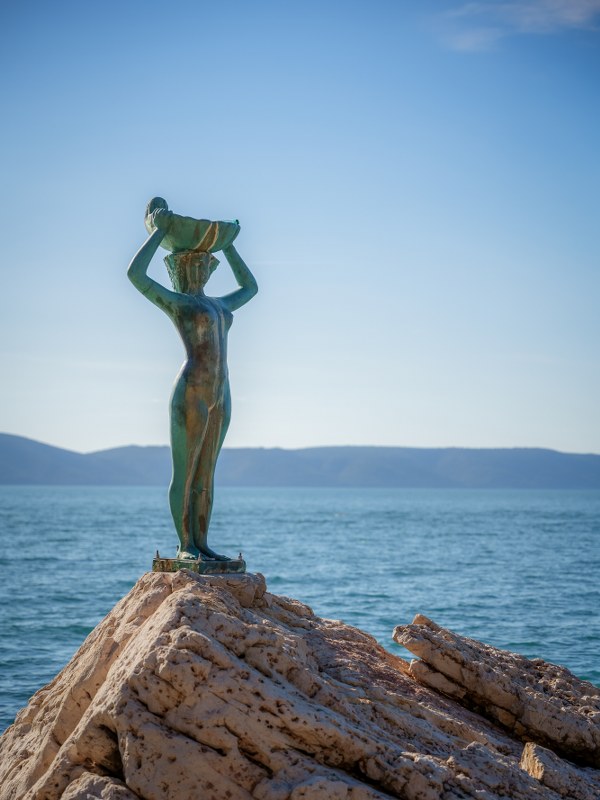
8. The Nymph — Živogošće
Location: Near the natural freshwater springs, Živogošće
Theme: Water mythology, Roman heritage
In Živogošće, the Nymph stands beside the freshwater springs that give the village its identity. These springs flow directly from the limestone massif of Biokovo and have been celebrated since at least Roman times: nearby, carved into the living rock, is a 1600-year-old epigram praising the water, possibly the oldest “review” ever written about this stretch of coastline.
The sculpture connects the village to that ancient relationship between mountain water and human settlement. Živogošće sits between Igrane to the north and Drvenik to the south, an easy stop along the coastal road.
- Best combined with: The Franciscan Monastery of the Holy Cross in Živogošće, and the coastal walk south toward Drvenik.
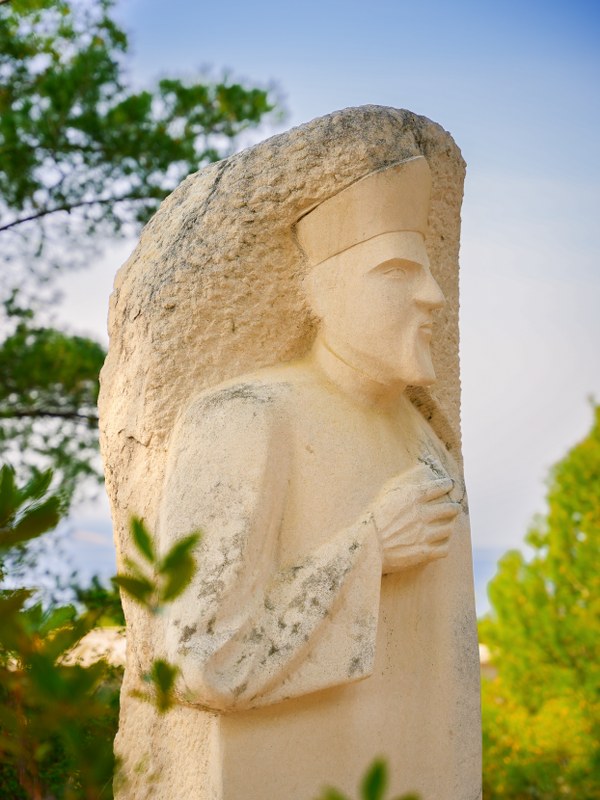
9. Bishop Nikola Bijanković — Brela
Location: Brela coastal path, near Brela Stone
Theme: Compassion, local historical identity
On the coastal path of Brela, one of the most celebrated stretches of the Riviera, passing the famous Brela Stone where a solitary pine grows from a rock in the sea, stands a monument to an 18th-century bishop who chose his people over his silver.
Nikola Bijanković is remembered on this coast not for theological doctrine but for a human act: during a period of severe famine, he pawned his own church valuables to buy food for the people of Brela and the surrounding settlements. In a region where the line between survival and disaster was often drawn by the sea or the mountain, that act was not forgotten.
- Best combined with: The full coastal walk from Brela toward Baška Voda; the path passes the Brela Stone and continues along the sea all the way to Vruja Bay.
A route through the open-air gallery of Riviera’s sculptures
All nine sculptures listed above can be visited on a single day’s drive along the coastal road. Start in Brela with Bishop Bijanković in the morning, continue south through Makarska and Podgora, stop in Igrane and Živogošće for the afternoon, and end the day at the waterfront of Zaostrog or Gradac as the light goes golden.