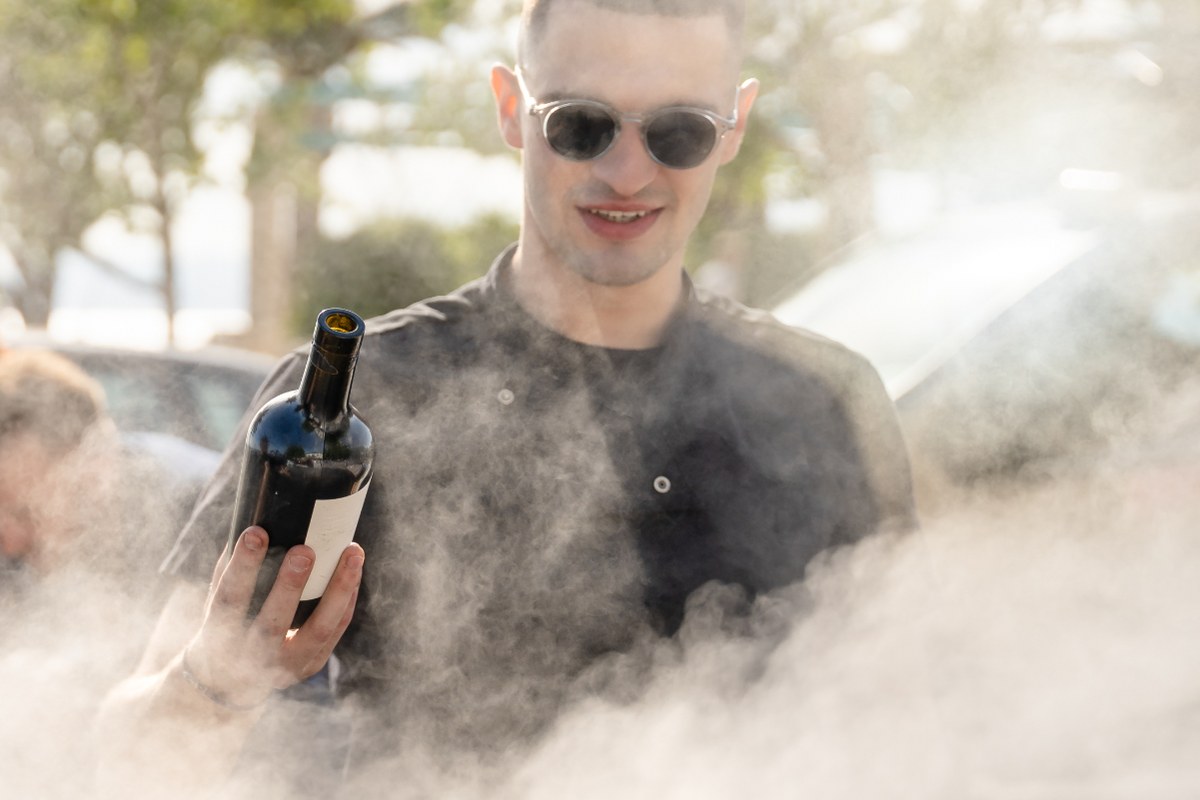
Events

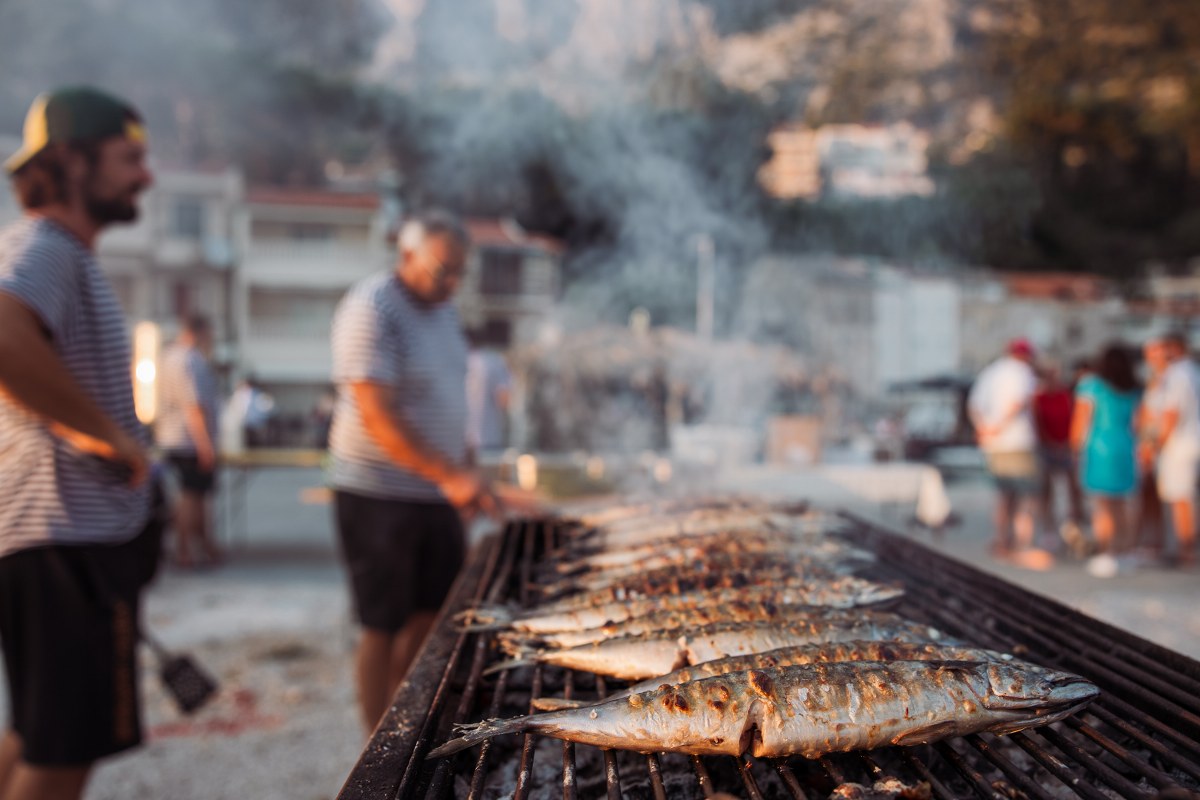
On the Makarska Riviera, summer does not truly begin with the first swim. It begins with the first smell of fish grilling on an open fire by the waterfront, the signal that the fishermen’s nights have returned.
These evenings have been a fixture of coastal life along the Riviera for generations. The fishermen’s night is the moment the coast pauses to remember the bond between the people of this coast and the Adriatic, which once meant mere survival. It is not a performance put on for visitors. It is the real thing.
Generations of tradition
Before tourism, the sea was the primary source of food and livelihood for many families along the Riviera. Fishing was not a seasonal activity; it was the foundation of daily life. Men launched wooden boats before dawn, navigating by the stars and the shape of Biokovo’s silhouette against the night sky, reading the wind and the current to find where the fish were running.
The species that defined the Adriatic fisherman’s catch are still celebrated at these evenings today: plava riba, the blue fish of the open sea, including sardines (srdela), mackerel (skuša), anchovies (inćun), and bluefish (palamida). These were not luxury ingredients. They were daily sustenance, preserved in salt for winter, shared across the whole village when the catch was good.
The fishermen’s night is the living memory of that world. It is a celebration of the sea that raised an entire civilisation on this narrow strip of coast between the mountain and the water. As one of the oldest recurring summer events in Dalmatia, it is, in the truest sense, a thank-you note to the Adriatic.

What happens on fishermen’s nights
The format varies slightly from town to town. Still, the essence is always the same: the waterfront, the riva, is taken over by long communal tables, open fires, and the smell of grilling fish that drifts across the harbour and into the summer night.
At the centre of every table is the food. Fresh fish grilled directly over charcoal is the staple; sardines are the most traditional, but the menu often extends to squid (lignje), octopus salad (salata od hobotnice), and brudet (a slow-cooked fish stew).
As the evening deepens, the music starts. The sound most associated with these nights is klapa, a form of unaccompanied a cappella harmony that originates in Dalmatia and was inscribed on UNESCO‘s list of intangible cultural heritage in 2012. A klapa ensemble typically consists of a small group of male voices singing in close harmony about the sea, love, and the homeland. Hearing it on a warm night with the lights of the harbour reflected in the water below is one of those travel experiences that is very difficult to describe and almost impossible to forget.
The whole village on the riva
There is a particular quality to the atmosphere when an entire community gathers in one place with no particular agenda beyond enjoying the evening together. The fishermen’s night is that kind of event, not a concert or a festival in the organised sense, but something more organic: a collective exhale at the end of the working day, scaled up to include the whole town.
Children run between the tables while their grandparents sit with glasses of wine and watch the harbour. Local fishermen, some of whom still go out before dawn, are the unofficial guests of honour. Folk costumes sometimes appear, the traditional dress of the Dalmatian hinterland, with embroidered aprons and lace that connect these waterfront evenings to a world that predates the coastal road.
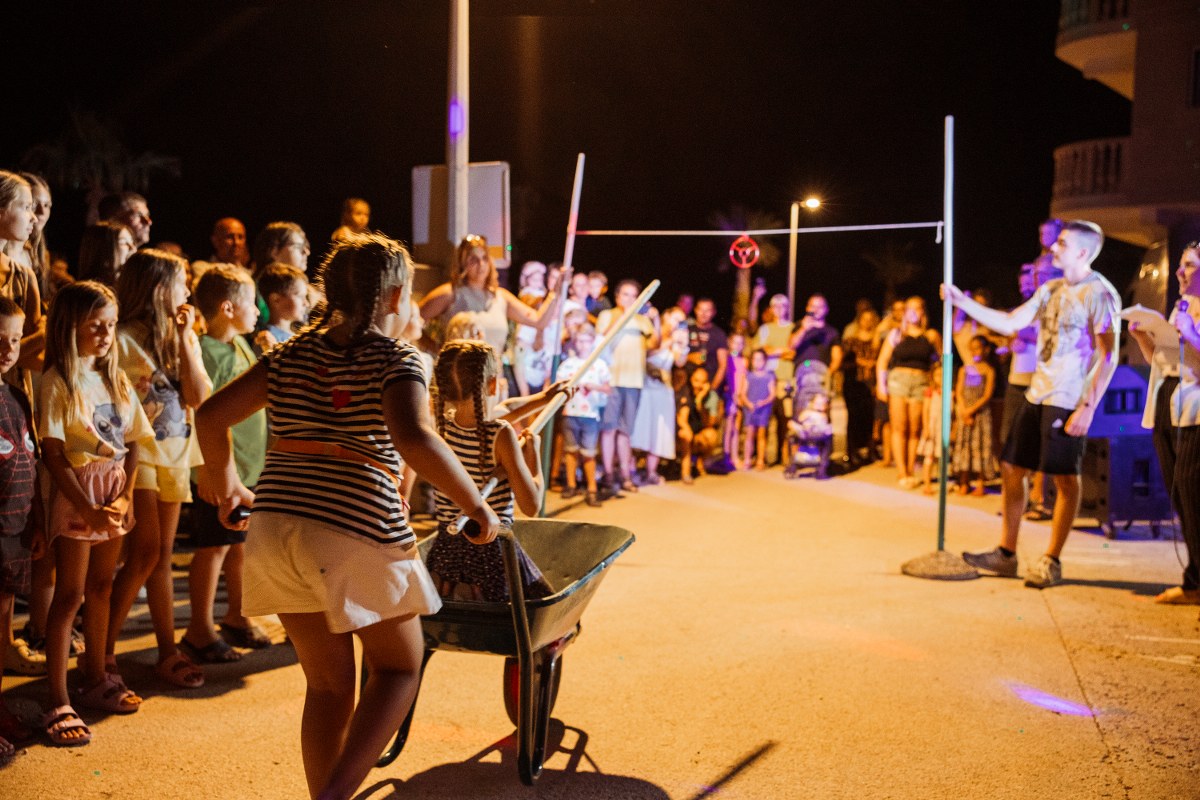
Traditional games are part of the programme in many towns: tug-of-war (povlačenje konopa), for example.
Fishermen’s nights are always 10 minutes away
The best part about the Makarska Riviera is that you are never far from the action. The Riviera stretches along roughly 60 kilometres of coastline, from Brela in the north through Baška Voda, Makarska, Tučepi, Podgora, Igrane, Živogošće, Drvenik, to Gradac in the south. Almost every town organises its own fishermen’s night during the summer months, which means that no matter where you are based, an authentic evening is either happening on your own waterfront or just a scenic ten-minute drive along the coastal road.
The local tourist boards and cultural associations of each town organise the events. For current dates and programmes, check the event calendars directly on the websites of the tourist offices in Makarska, Baška Voda, Brela, Tučepi, Podgora, Igrane, Živogošće, Drvenik, and Gradac. Events typically run from June through August and sometimes September.


Practical tips
Arrive early: Most fishermen’s nights start around sunset, typically between 7 pm and 9 pm depending on the town and the time of year. Arriving 30 minutes early gives you a chance to settle in, order a drink, and watch the preparations.
No reservation needed: These are free public events. The food and drinks are sold at the waterfront, typically at very reasonable prices and sometimes even for free!
Bring the family: There is no age limit at a fishermen’s night. Children are genuinely welcome, and the traditional games and dances are designed for participation across all ages.
Dress casually: This is a waterfront evening in a working Dalmatian town. Light summer clothing is perfectly appropriate.
Check dates in advance: Fishermen’s nights are typically held once per month per town. Always verify current schedules through the local tourist board websites before planning your evening.