Tradition&Heritage


There’s a particular feeling that comes with catching sight of a bell tower over the rooftops as you round another bend on the coast — half recognition, half relief. You’re on the Makarska Riviera, and this is more or less how the coast has always confirmed that to people passing through.
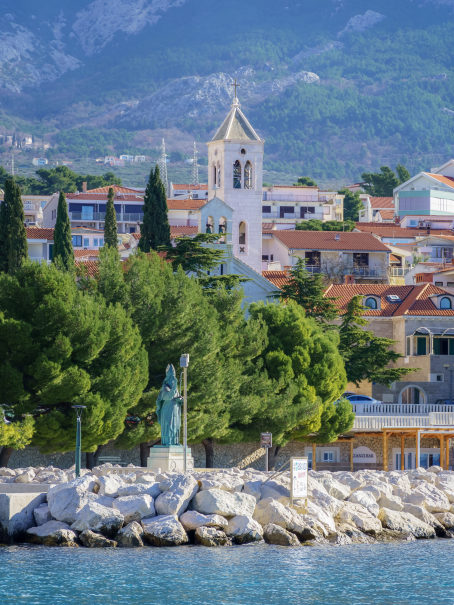
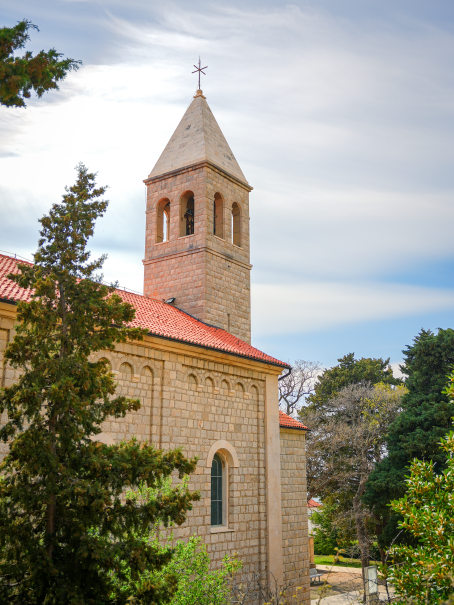
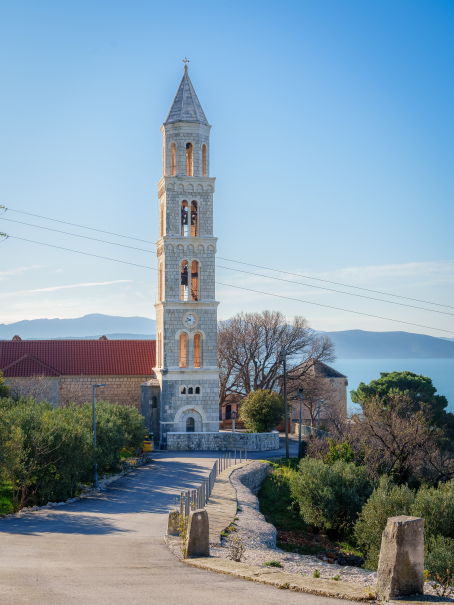
Before highways and coastal roads existed, and long before Google Maps, these were the landmarks that guided travelers
Back then, the coastline was shaped around them. Beaches, car parks, and viewpoints came much later; what mattered was the parish, the monastery, and the bell whose sound reached all the way to the sea.
Did you know that sailors once used church bell towers as navigation points, lining up their familiar silhouettes with the mountain rising behind them? It’s no accident that Baška Voda greets travelers from the sea with the monument and church of St. Nicholas in full view — especially meaningful, as St. Nicholas is the patron saint of sailors.
When the magistrala was finally cut into the cliffs beneath Biokovo, linking Brela to Baška Voda, Makarska, Tučepi, Podgora, Igrane, Živogošće and on down toward Gradac and Drvenik, it mostly followed a logic that already existed: it connected the places that had always mattered, and those places, more often than not, were marked by a tower. Every church along the magistrala carries a piece of Dalmatian heritage that the road itself never explains — you have to stop to hear it.
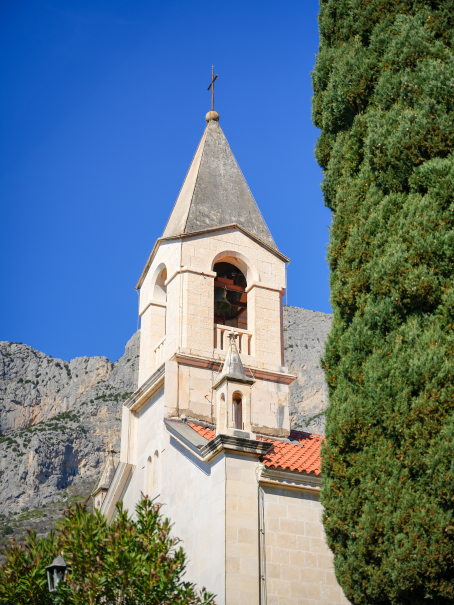
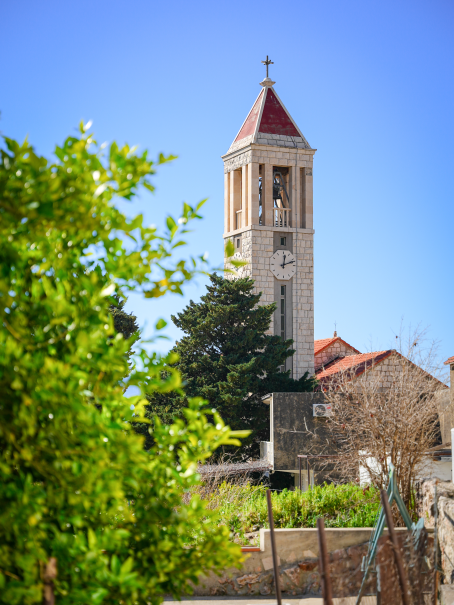
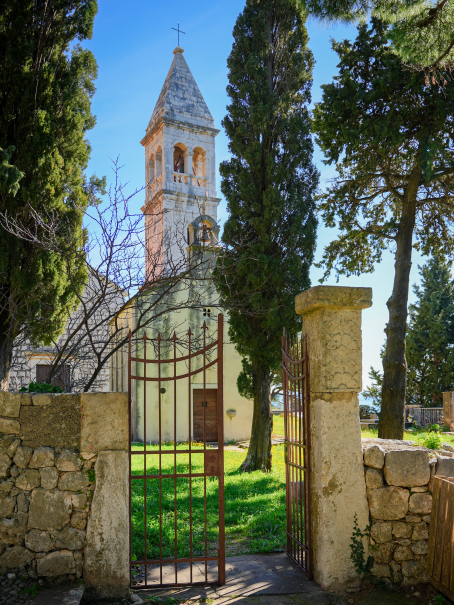
What’s easy to forget, standing under one with sunscreen on your hands and a ferry to catch, is that these buildings weren’t just about faith. The Franciscans who built and kept most of them were, for centuries, the closest thing this coast had to a university.
Museums and libraries, the rich cultural heritage of the Makarska Riviera
In Makarska, the monastery library still holds more than sixty thousand volumes, gathered since the 15th century — one of the richest collections anywhere between Split and Dubrovnik, alongside archives, valuable manuscripts, and a school of philosophy and theology that once trained friars from across the region. Find out more:
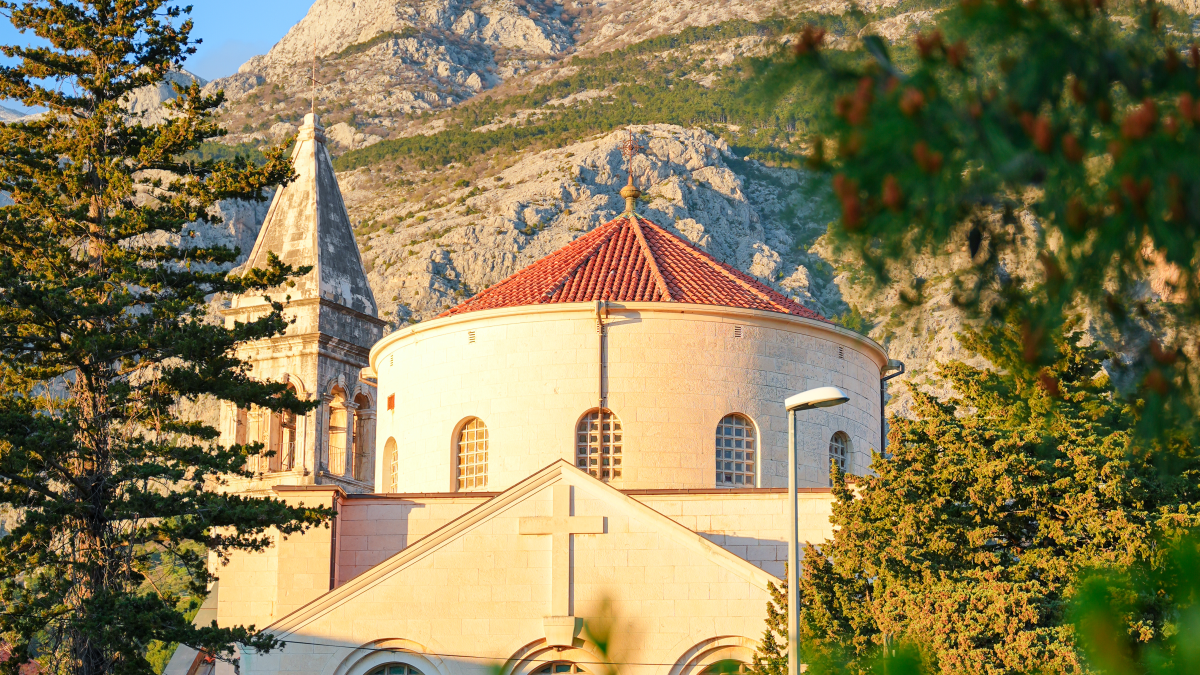
Dalmatian Church Heritage and the Stories It Holds
That’s worth carrying with you as you make your way along the Riviera, from the beaches and pine-shaded coves near Brela, with their views back toward Biokovo, down to the old stone streets of Živogošće and Igrane. Each tower is doing something slightly different, if you let yourself notice.
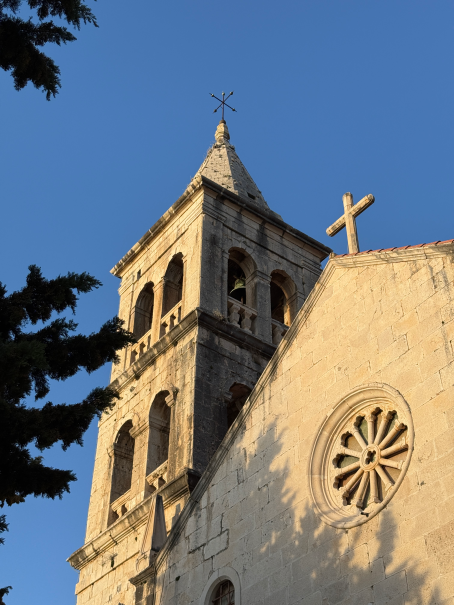
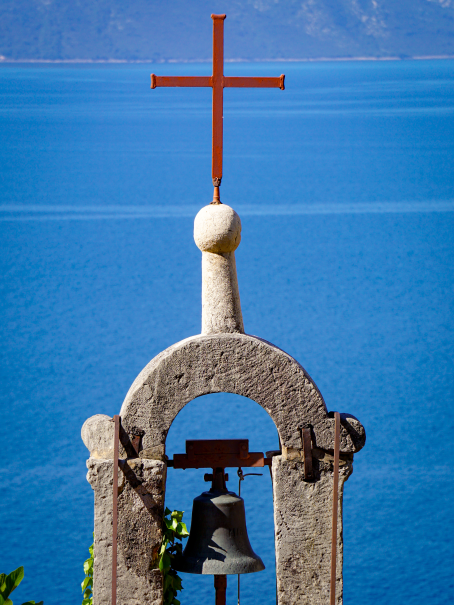
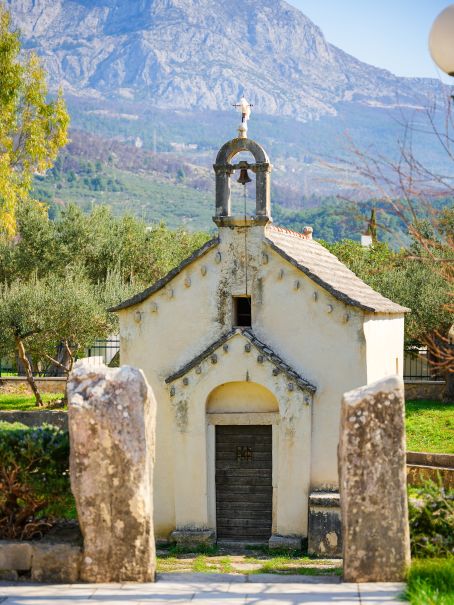
None of that history announces itself from the road. It takes a small effort to find — leaving the beach towel for an hour, following the path up behind old Podgora to where the little church of Sv. Roka sits quietly above the rooftops, or taking one of the trails that climb from the coast into the abandoned hillside hamlets above Tučepi and Podgora, built long before anyone thought to lay down a seafront promenade.
A short hike, a slow bike ride along the old inland roads, even a morning run up from the water while the coast is still cool — these are, in their own way, the same instinct that pilgrims and villagers have always followed here: moving toward the tower on purpose, not just glancing at it from a passing car.
So the next time a tower appears above the rooftops, or above a beach, or across the water from a boat on the Adriatic — and something in you quietly says there it is — trust that instinct. You’re on the Makarska Riviera, and there’s almost always more to the place than the silhouette lets on.
Dive deeper into the monasteries of the Makarska Riviera and uncover the treasures and secrets they hold. Learn more at the link.
For more details on these bell towers, their history, visiting options, and Mass schedules, visit the official websites of the local tourist boards.