
Tradition&Heritage

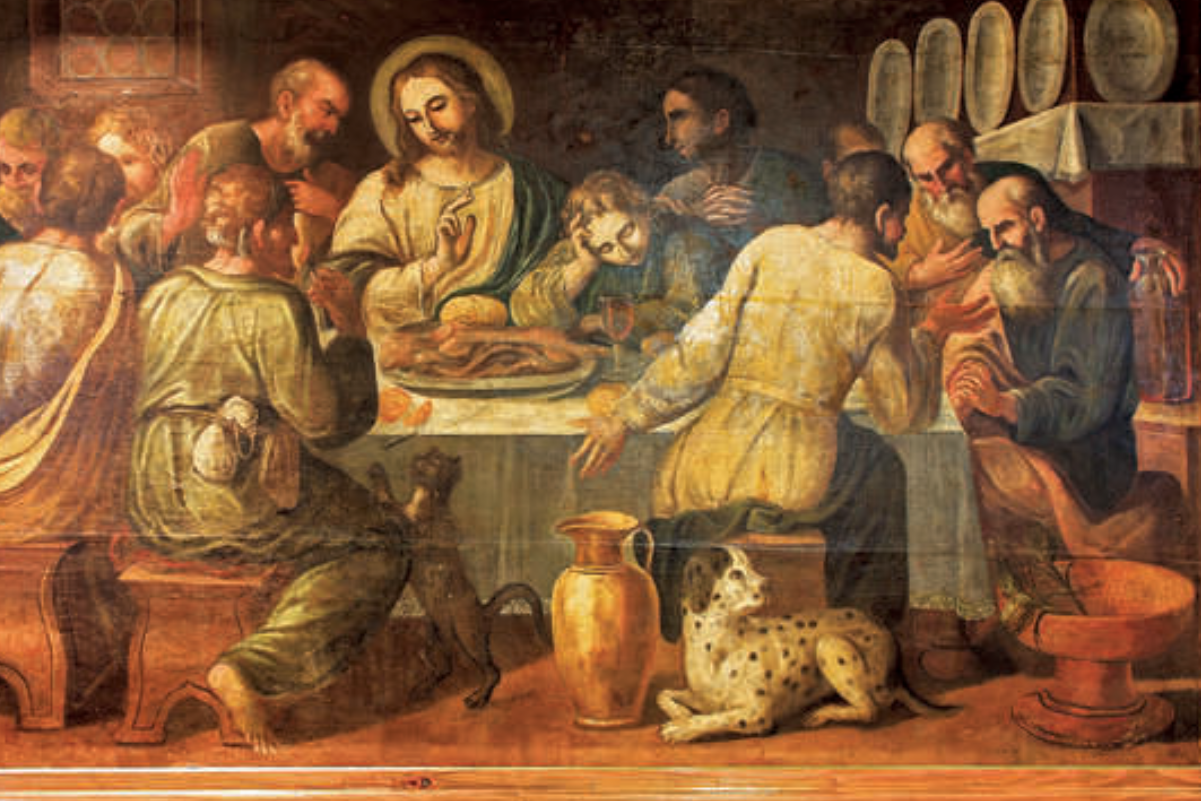
The Dalmatian is one of the most recognisable dogs in the world, and it carries the name of this coast for a reason. One of the clearest pieces of evidence linking the breed to its home ground is not in a museum or an archive — it is hanging inside a working Franciscan monastery on the quiet southern stretch of the Makarska Riviera, in Zaostrog.
What is the Dalmatian dog painting in Zaostrog?
Inside the Franciscan Monastery of St. Mary in Zaostrog hangs an 18th-century oil painting of the Last Supper (Posljednja večera). At the bottom of the canvas, beside the apostles’ feet, sits a white dog covered in clear black spots — painted, most sources agree, sometime between 1710 and 1750. It is widely described as the earliest known depiction of a complete Dalmatian dog, and it is one of the pieces of evidence cited in the breed’s own official history.
Quick facts: the Dalmatian dog of Zaostrog
| Location | Franciscan Monastery of St. Mary, Zaostrog (Southern Makarska Riviera) |
| Artwork | “The Last Supper” (Posljednja večera) |
| Estimated age | Most sources date it to around 1710–1750; some describe it more broadly as “18th century” |
| Artist | Unknown, often attributed to the Venetian painting school |
| Significance | One of the earliest known depictions of a complete Dalmatian dog, referenced in the FCI’s official breed standard |
A dog at the Last Supper
In the monastery’s pinacoteca, a large Baroque oil painting of the Last Supper draws the eye first for its biblical scene, and then, once you look closer, for the small detail at the bottom of the canvas. Sitting calmly near the apostles’ feet is a dog with the same white coat and black spots that make the Dalmatian instantly recognisable today.
In Baroque religious art, dogs were often included as symbols of loyalty and fidelity. Here, the unknown painter went a step further and grounded the biblical scene in local life, giving the dog the unmistakable markings of the breed already being kept in this part of Dalmatia at the time.
Why this painting matters
It is sometimes described as the oldest picture of a Dalmatian in the world, but that particular claim does not hold up. What makes the Zaostrog painting stand out is more specific: it is widely considered the earliest known depiction of a whole Dalmatian dog, not a fragment glimpsed between figures. The FCI’s (the Fédération Cynologique Internationale) own breed standard explicitly references a depiction “in Zaostrog, Dalmatia, Croatia” as part of the documented trail connecting the breed to this coast.



Every August, the whole Riviera turns black and white
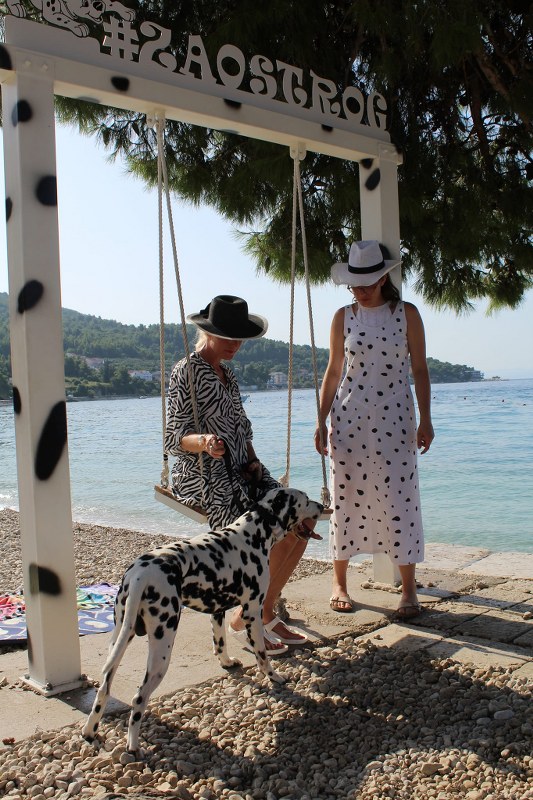
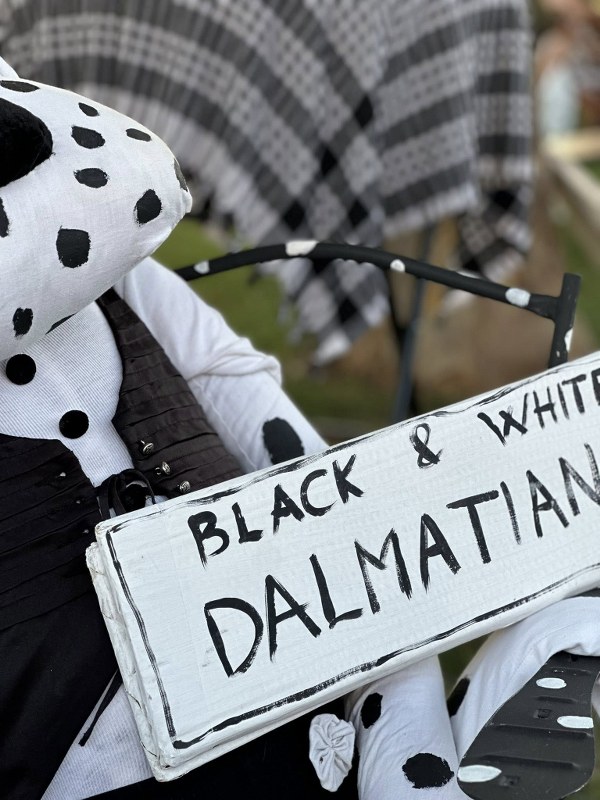
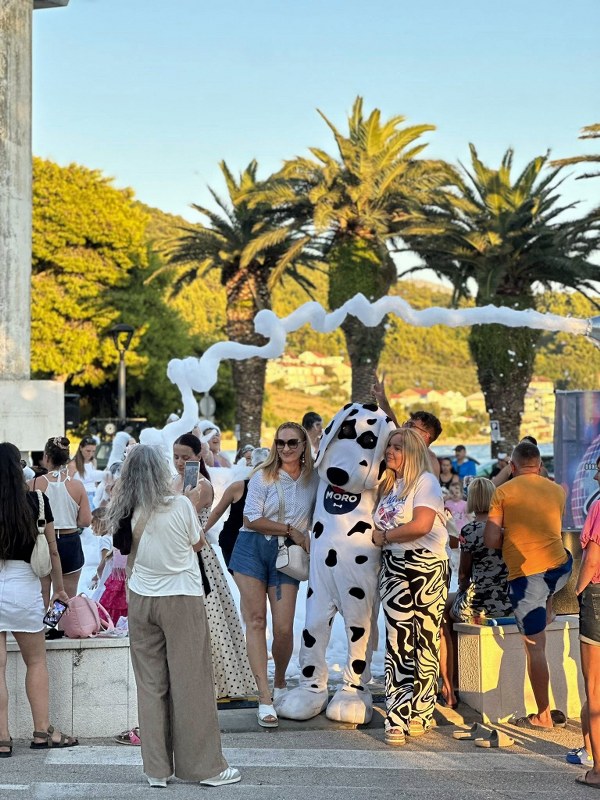
The story painted into that 18th-century canvas hasn’t stayed in the past. Every year on 26 August, International Dog Day, towns all along the Makarska Riviera — from Brela to Gradac — take part in “Black and White – Dalmatian Dog Night”, a tradition that began in Zaostrog itself, led by local puppeteer and dog enthusiast Božena Delaš. Squares and waterfronts fill with black-and-white decorations, face painting, dog-themed costumes and family activities, turning the whole coast into a living tribute to the same spotted breed that has been quietly watching over the apostles in Zaostrog for three centuries. If your visit lands on 26 August, it’s worth checking which town along the Riviera is hosting that year’s celebration.
The paper trail that named the breed
The painting in Zaostrog is one piece of a longer historical record that ties the Dalmatian directly to this region:
Church chronicles (1719): the earliest written description of the breed appears in the records of the Đakovo diocese, in the chronicles of Bishop Petar Bakić, where the dog is named in Latin as Canis Dalmaticus.
Thomas Pennant (1771): the British naturalist gave the breed its English name in his book Synopsis of Quadrupeds, pointing to Dalmatia as its place of origin.
FCI recognition (1994): the Fédération Cynologique Internationale officially recognised Croatia as the Dalmatian’s country of origin, a status confirmed in its current breed standard, FCI No. 153.
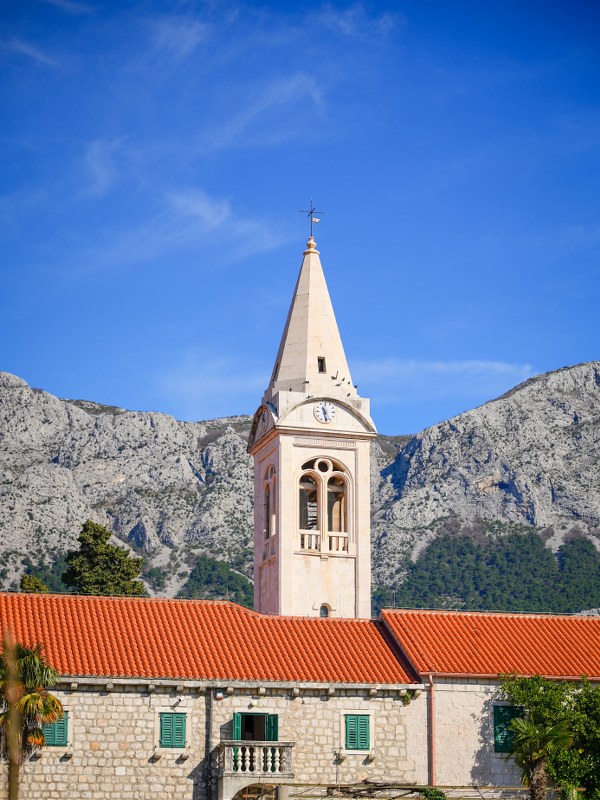
Visiting the Franciscan Monastery in Zaostrog
The Monastery of St. Mary is more than a home for one painting; it is one of the most culturally significant landmarks on the entire Makarska Riviera, founded in the 15th century and still an active religious community today.
Beyond the painting
The library: some sources put the monastery’s collection at over 20 000 volumes (others cite more than 30 000), either way, it includes valuable incunabula, meaning books printed before 1501.
The botanical garden: a peaceful inner courtyard planted with more than 250 species of Mediterranean and exotic plants.
The memorial room of Fra Andrija Kačić Miošić: dedicated to one of Croatia’s most celebrated folk poets, who lived and worked at this monastery.
Planning your visit
How to get there: Zaostrog sits on the southern end of the Makarska Riviera, roughly 30–40 minutes by car south of Makarska along the D8 coastal road.
Working hours: the monastery museum is generally open to visitors, but hours can vary by season. It is worth checking directly with the monastery before you go.
Dress code: this is an active monastery and a sacred space, so visitors are expected to dress respectfully, with shoulders and knees covered.
The Dalmatian trotting through a Disney film or guarding a firehouse is only the postcard version of this story. Look a little closer — into a quiet pinacoteca in Zaostrog, at the feet of painted apostles — and the same spotted dog runs three centuries deep into the history of this coast.