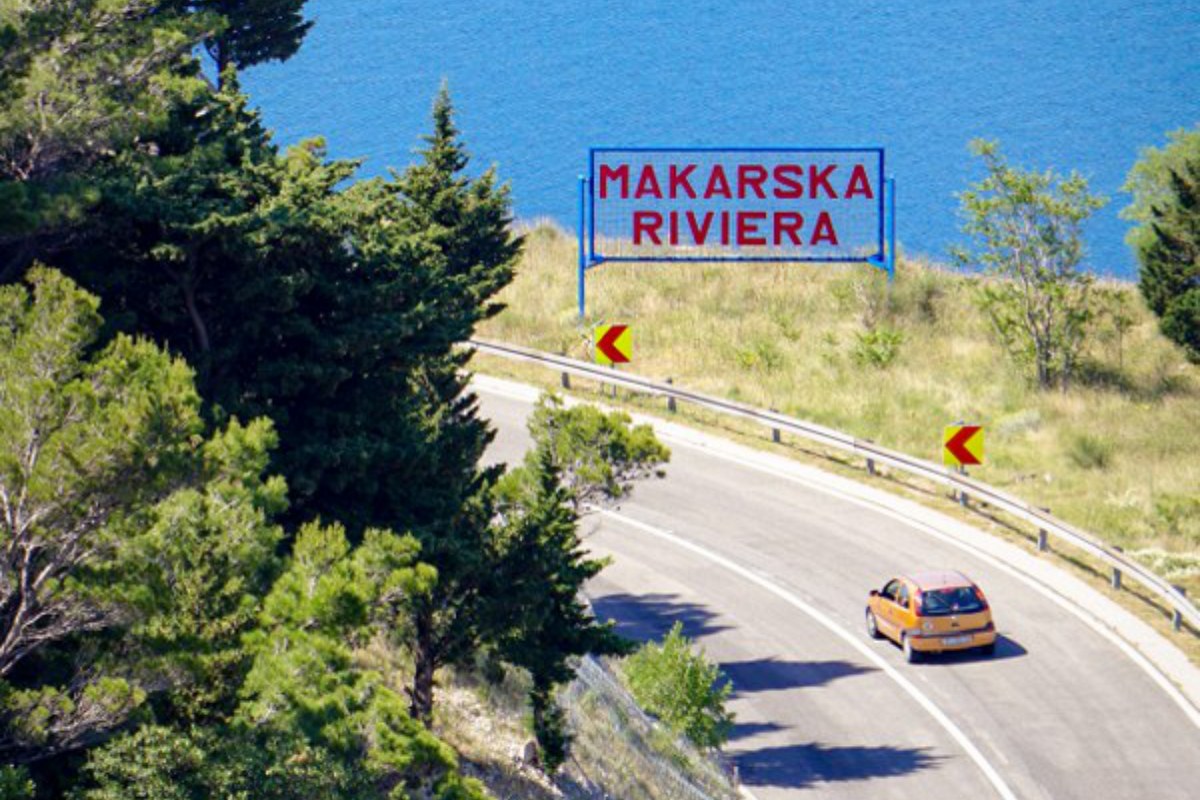
Guides

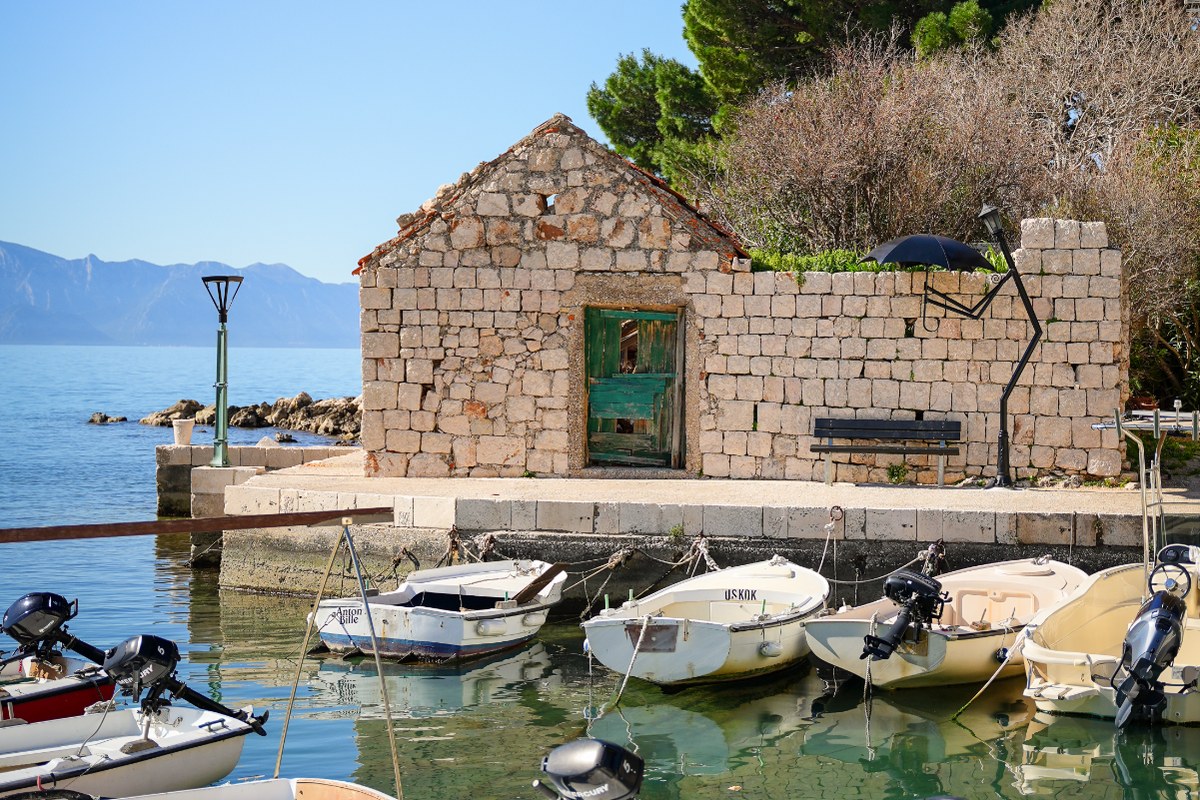
Most visitors to the Makarska Riviera stay north — between Brela, Baška Voda, Makarska and Tučepi. The southern part of the coast is a different story. From Zaostrog to Gradac, the Riviera slows down considerably. The villages are smaller, the beaches less crowded, and the sense of place is stronger. If you have three days and want to experience the Riviera beyond the postcard, this is where to go.
This guide covers the southern Makarska Riviera in three days: Zaostrog, Drvenik, Podaca, Brist and Gradac, with practical information, verified opening hours and enough flexibility to make the itinerary your own.
What is the southern Makarska Riviera?
The Makarska Riviera stretches 60 kilometres along the Dalmatian coast, from Brela in the north to Gradac in the south. For this guide, the southern section covers the area from Zaostrog southward: five distinct settlements, each with its own character, connected by the coastal road D8.
The area is about 35 to 55 kilometres southeast of Makarska, making it easy to reach by car. It’s less served by public transport than the northern Riviera, so having your own vehicle is recommended.
3-day itinerary quick overview
| DAY | MAIN LOCATION | KEY HIGHLIGHTS | TRAVEL TIME (FROM ZAOSTROG BASE) |
| DAY #1 | Zaostrog | Franciscan Monastery of St. Mary, historic library (500-year-old dictionary), botanical garden, grave of Andrija Kačić Miošić | Base / 0 min |
| DAY #2 | Drvenik & Podaca | Ivičević estate, quiet coves, short coastal drive | 10–15 min drive |
| DAY #3 | Gradac | Gornja Vala, one of the largest beaches on the Adriatic | 20–25 min drive |


Day 1 — Zaostrog: Monastery walls and a beach right next door
Morning — Zaostrog old village
Start with a walk through the old village above the coast. Three churches: the old Gothic Church of St. Barbara, the Church of St. Roko from the 17th century, and a newer Church of St. Barbara built in 1872, sit among stone houses and old paths that lead to a natural spring with cold Biokovo water. It’s a short walk uphill and a good way to ease into the day before the heat arrives.
Afternoon — Franciscan Monastery of St. Mary
The Franciscan Monastery of St. Mary has been standing beside the sea since the 15th century. It is one of the most significant cultural and religious monuments on the entire Makarska Riviera, and it shows.
Inside you’ll find a library with over 30,000 volumes, including 24 incunabula and 500 books printed between 1500 and 1600, an ethnological collection, a gallery of works by Dalmatian painter Mladen Veža, and a botanical garden with over 250 plant species. The grave of Fra Andrija Kačić Miošić, one of Croatia’s most prominent folk poets, is at the entrance to the church. In the monastery’s pinacoteca, look for an 18th-century oil painting of the Last Supper: at the apostles’ feet sits a spotted dog that matches the Dalmatian breed exactly, one of the earliest known depictions of a complete Dalmatian dog anywhere in the world.
Evening
Dinner in Zaostrog. The beach sits directly beside the monastery walls; the evening almost plans itself.


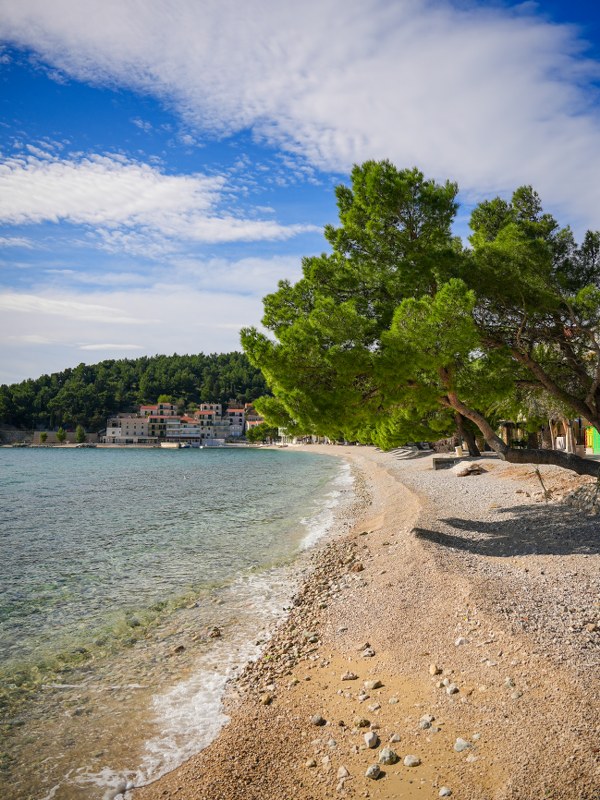
Day 2 — Drvenik and Podaca: Blue coves and abandoned stone
Morning — Drvenik
A short drive south from Zaostrog. Drvenik is a small fishing village with a blue cove, a working harbour and a calm that’s hard to find elsewhere on the Riviera. Above the village, the 15th-century Gradina fortress, once managed by the Vlatković princes, served as a strategic lookout during the Ottoman wars. It’s worth the short climb for the view and the history.
A practical note: the ferry from Drvenik to Sućuraj on the island of Hvar is a popular crossing. If you want a day trip to Hvar, this is the connection to use. Check current schedules at jadrolinija.hr.


Midday — Podaca old village
A few minutes’ drive from Drvenik. The old village of Podaca is a protected cultural heritage site of Croatia and one of the most photogenic and historically layered places on the southern Riviera.
At the centre of the village stand two churches: the smaller pre-Romanesque Church of St. John from the 12th century, built by the noble Kačić family, and the larger Baroque Church of St. Stephen from 1772, surrounded by an old cemetery with tombstones of the Kačić brotherhood. A defensive tower at the entrance to the village was built to protect inhabitants from Ottoman raids. There are no permanent residents here anymore, just stone houses, old paths and a silence that feels earned.
Afternoon
Lunch and a swim back down by the coast. The beach below Podaca is calm and considerably less crowded than beaches further north.


Day 3 — Brist and Gradac: Where the Riviera says goodbye
Morning — Brist
Brist is the birthplace of Fra Andrija Kačić Miošić, the Franciscan poet whose work you encountered in Zaostrog’s monastery. In front of the Parish Church of St. Mary, built in 1870 in the neo-Romanesque style, stands a bronze monument to Kačić Miošić, the work of master sculptor Ivan Meštrović, created in 1953 in the United States and placed here in 1960.
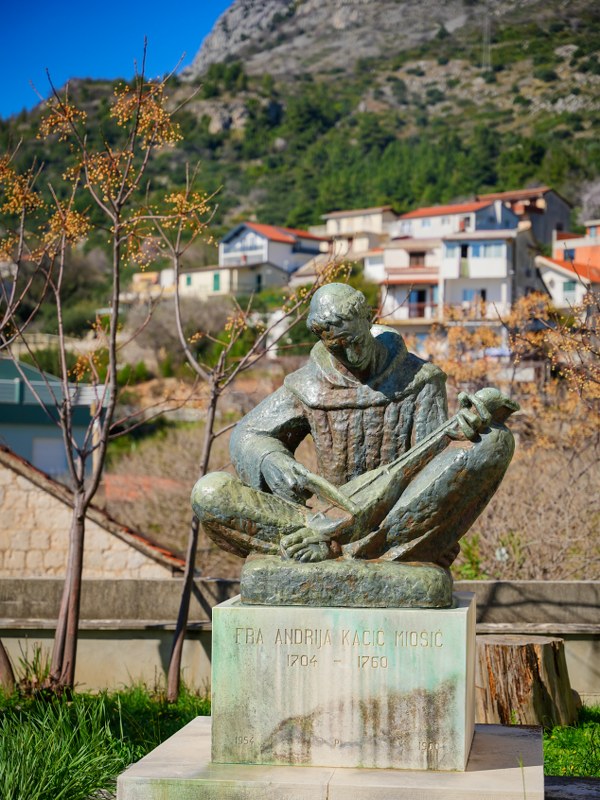
Brist is also the birthplace of painter Mladen Veža, whose gallery you may have visited at the Zaostrog monastery. A village with more cultural depth than its size suggests, so take a slow morning walk along the waterfront promenade.
Midday — Gradac
Gradac is the southernmost seaside town of the Makarska Riviera, about 55 kilometres from Makarska. The Church of St. Michael, the white tower, a long promenade and the Donja Vala beach make it a natural final destination on this stretch of coast. Have lunch here, swim and take your time leaving.
For those who want to stay active, the area around Gradac also offers kayaking and SUP tours, as well as access to the nearby Baćina Lakes, a series of interconnected freshwater lakes popular for kayaking and nature walks.
Evening
Drive back north along the coastal road D8 at golden hour. Stop wherever the light catches the sea.
Practical information for visiting the southern Makarska Riviera
Getting there: The southern Makarska Riviera is best reached by car via the coastal road D8. Zaostrog is approximately 35 km from Makarska, Gradac approximately 55 km.
Best time to visit: May, June and September offer warm weather with significantly fewer crowds than July and August. All key attractions are accessible throughout the summer season.
Getting around: Public transport between these villages is limited. A car is strongly recommended.
Zaostrog Franciscan Monastery: Address: Obala Hrvat. Domoljuba 36, Zaostrog 21334.
Drvenik ferry to Hvar (Sućuraj): schedules and tickets at jadrolinija.hr.
TZ Gradac (local tourist board): gradac.hr | +385 (0)21 697 511 | info@gradac.hr.
PHOTO | BORIS LUETIĆ
More Stories to Explore
Guides
Central Riviera in 3 days: Podgora, Drašnice, Igrane, Živogošće
Guides
Northern Riviera in 3 days: Brela, Baška Voda, Makarska, Biokovo, Tučepi
Guides
Why visit the Makarska Riviera: 10 wonderful reasons this coast works every single year
Guides
The big book of more than 80 answers: Every frequently asked question in one place